
Abdominal Hernia
Overview
When an internal tissue or organ is pushed towards a weak are in the abdominal wall it causes an abdominal hernia. The function of abdominal wall is to protect and support the internal organs, so when the wall weakens , a very visible lump or raised area may appears near the abdomen or groin area.
It develops slowly and gradually but its visible after physical exertion , some people feel uncomfortable and slight pain or pressure while others only notice swelling or a lump, if its diagnosed timely it can prevent complications and timely treatment.

What Are Abdominal Hernias?
Abdominal hernia is caused by the push of tissue or fat throught the abdominal muscles when the abdominal wall is weakened, we can also call this condition hernia abdominal or abdominal wall hernia, theres a swelling or budgle is visible in this contidion , it usually appears while physical exertion , standing for long or coughing.
Hernias can appear in different size and have different symptoms, in some cases its small and painless, for some they can be large in size and can be a bit uncomfortable
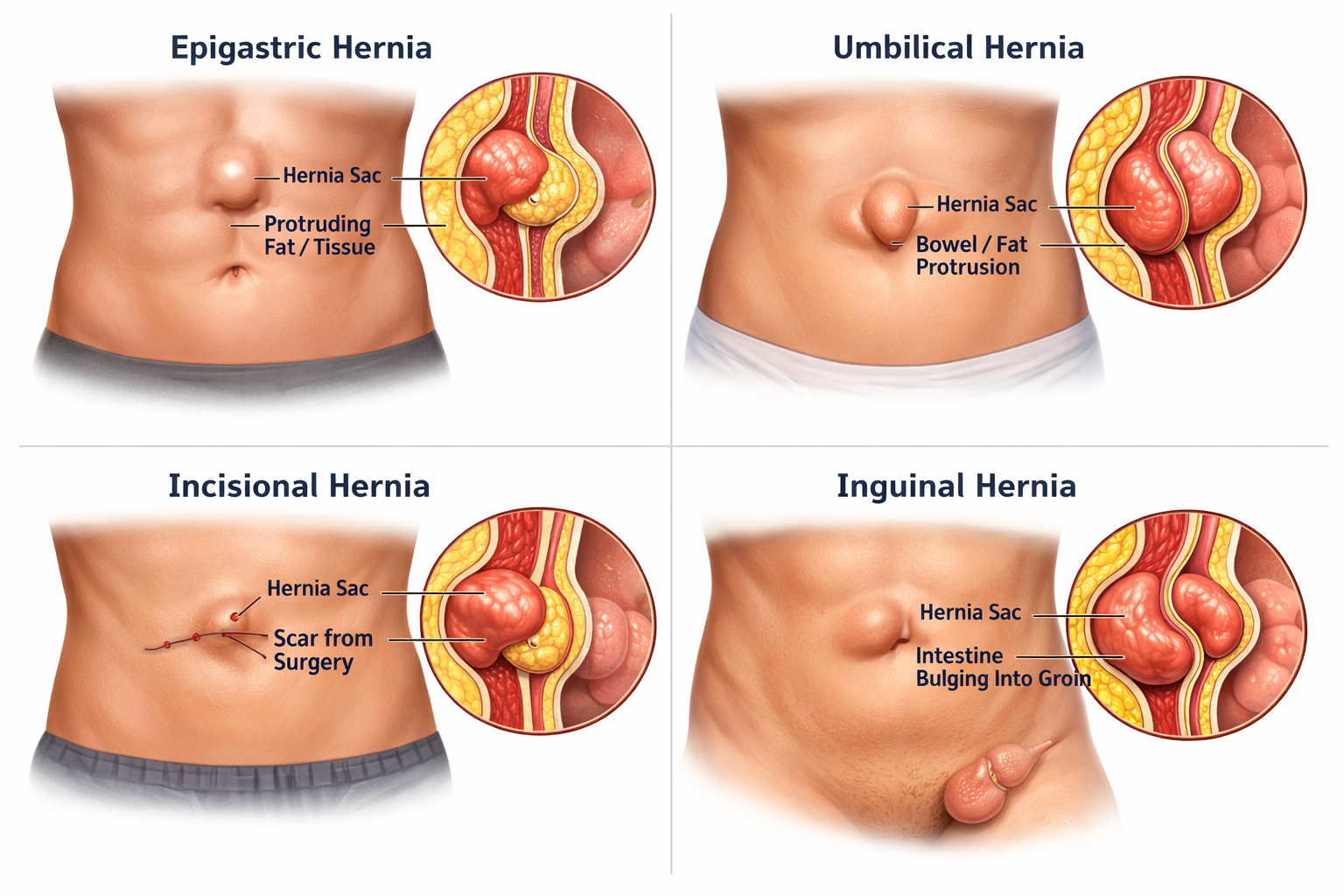
Types of Abdominal Hernia
Umbilical Hernia
This appears around the navel area , it causes the swelling around the belly button which can be increased due to coughing or physical exertion
Incisional Hernia
An incisional hernia forms at the site of previous abdominal surgery. Muscle weakness along the surgical scar allows tissue to protrude.
Epigastric Hernia
This type of hernia causes discomfort as it appears between belly button and chest allows tissue to protrude.
Inguinal Hernia
Inguinal Hernia is more common in men than women, it appears in the groin area when tissue pushes throug the weak muscle area.
Femoral Hernia
Fermoral hernia is more common in women than in men, it can be risky if left untreated , it appears in the upper thigh or lower groin muscle area.
Abdominal Hernia Symptoms
Symptoms depend on the type and size of the hernia. Some people experience mild discomfort, while others notice visible swelling.
Common abdominal hernia symptoms include:
- Visible bulge in the abdomen or groin
- Pain during lifting or bending
- Burning or aching sensation
- Feeling of pressure in the stomach area
- Swelling that reduces when lying down
Severe pain, nausea, vomiting, or a hard bulge may indicate a complication. Immediate medical attention is recommended in such cases.
If you notice persistent swelling or discomfort, medical evaluation can help confirm the condition early.

Causes and Risk Factors
An abdominal hernia develops when muscle weakness combines with increased abdominal pressure. Weakness may be present from birth or develop over time.
Common causes include:
- Heavy lifting
- Chronic coughing
- Constipation or straining
- Pregnancy
- Previous abdominal surgery
- Aging-related muscle weakness
Risk factors such as obesity, smoking, and frequent strenuous activity increase pressure on the abdominal wall.
Tests and Diagnosis
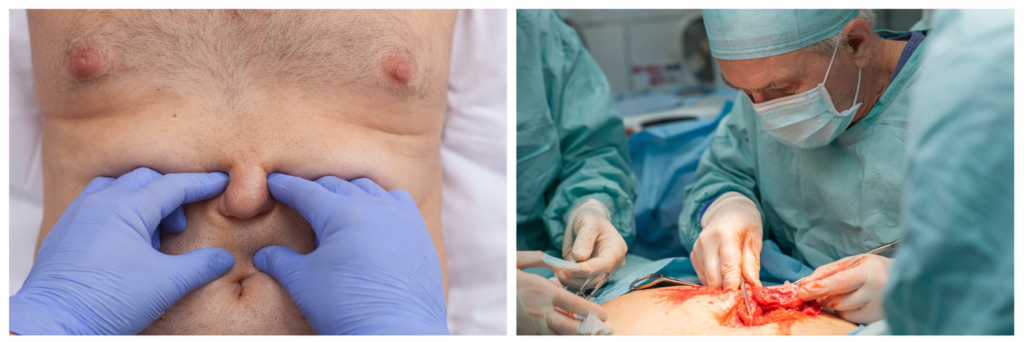
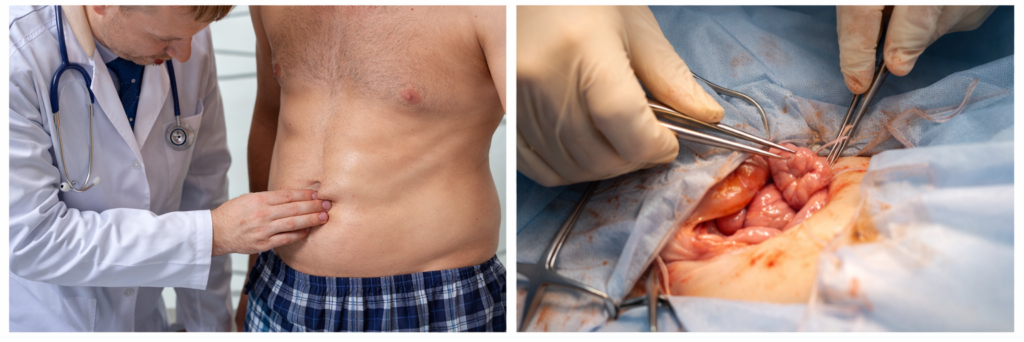
To diagnose abdominal hernia the doctor or the physician will check for the bulge or swelling while the patient stands or cough, as it appears better when the person cough or stand , the location and size of the hermia will tell which type of hernia it is , and then the doctor will recommend the treatment options for that type
Sometimes its not quite visible even after standing up or coughing, in that case the doctor will ask for some rest, like CT scan, MR or ultrasound for better diagnosis
Treatment
Therapy Size, complication risk, and symptoms all influence treatment. If there are no symptoms, small hernias might merely need to be monitored and lifestyle modified. Surgery is frequently used to address symptomatic abdominal hernias.Strengthening the abdominal wall and restoring the tissue to its natural position are the goals of the surgery. The severity of the hernia and general health determine the course of treatment.
Surgery for Abdominal Hernias
Surgery for an abdominal hernia fixes the damaged muscle and stops it from happening again.There are two methods for performing surgery: open and laparoscopic. The surgery and the patient’s health have an impact on recovery time. During their recuperation, patients are typically counselled to refrain from heavy lifting and adhere to their doctor’s orders.
Having an Abdominal Hernia
Avoiding actions that raise abdominal pressure is necessary when living with an abdominal hernia. Sustaining a healthy weight could potentially alleviate discomfort. Controlling a persistent cough and avoiding constipation can also aid in symptom management. In the event that surgery is postponed, routine monitoring is crucial. A medical specialist should assess any change in symptoms.
Issues
Abdominal hernias can cause major problems if left untreated. When tissue becomes stuck and cannot be forced back, it results in an incarcerated hernia. When there is less blood flow to the confined tissue, a strangulated hernia develops.Emergency medical attention is necessary for this condition. Severe discomfort, vomiting, fever, and redness around the bulge are warning signals.
Hernia Abdominal Binder
The abdominal muscles are temporarily supported by an abdominal binder. It might lessen pain when moving or recovering from surgery.But it doesn’t fix muscle weakness or heal the hernia. Before using for an extended period of time, medical guidance is advised.
Early medical assessment is advised if you observe persistent or worsening stomach swelling, discomfort, or pressure. Early symptom detection promotes proper therapy and helps avoid problems.
FAQS
What are abdominal hernias?
Abdominal hernias occur when internal tissue pushes through weakened abdominal muscles, causing a bulge or discomfort.
Is abdominal hernia surgery always required?
Not always. Small and painless hernias may be monitored, but symptomatic hernias usually require surgery.
Can an abdominal hernia heal without surgery?
Hernias do not heal on their own. Symptoms may improve temporarily, but the weakness remains.
What causes abdominal wall hernia?
Muscle weakness, heavy lifting, surgery, obesity, and increased abdominal pressure are common causes