
A summary of symptoms indicating a broken finger or thumb
If you fracture your finger, pain is typically the initial symptom you’ll experience. Your finger might also appear deformed or misaligned. Additional symptoms of a broken finger might include:
Bruising Discoloration of the skin due to injury.
Deformity Abnormal shape or misalignment of the finger.
Trouble bending or moving your finger Difficulty in flexing or extending the finger normally.
Redness Skin appears red, often indicating inflammation or irritation.
Stiffness Reduced flexibility or difficulty in moving the finger.
Swelling Enlargement or puffiness of the finger due to fluid accumulation.
Tenderness Pain or discomfort when touching the finger.
You might still be able to move your finger or thumb despite the break, but it will usually cause pain. The pain can range from dull to severe.
What exactly is a broken finger or thumb?
A broken finger or thumb happens when one or more bones in these digits fracture. A broken bone is called a fracture. People frequently break their fingers and thumbs in accidents or because of weakened bones.
Your fingers consist of small bones called phalanges, with each finger having three and the thumb having two. These bones are susceptible to breaking, and so are the knuckles, the joints where your finger bones connect.
To temporarily ease pain from a finger fracture, use ice, pain relievers, elevate the finger, and keep it immobilized. However, it’s essential to see a doctor promptly for an X-ray. Based on the fracture’s type and severity, your provider might recommend a splint to stabilize your finger or even surgery to fix the break. The doctor may also suggest repositioning the fracture, known as reduction.
What leads to a broken finger or thumb?
Injuries cause most finger and thumb fractures. The most common circumstances leading to broken fingers and thumbs include:
- Being hit by a fast-moving object like a baseball on your hand
- Extending your hand to catch yourself during a fall.
- Snapping your finger or thumb in a drawer or door.
- Sustaining an injury to your finger or thumb, for example, from a car accident.
- Using tools such as drills, power saws, or hammers
What are the risk factors for sustaining a finger or thumb fracture?
People with calcium deficiency or weakened bones are at a higher risk of fractures of the fingers and thumbs. Additionally, fractures are more likely to happen because of:
- Infection
- Calcium deficiency (lack of calcium) or vitamin D deficiency (lack of vitamin D)
- Metabolic bone disease
- Malnutrition
- Osteomalacia
- Osteoporosis or osteopenia
When should you seek urgent medical attention?
You should seek medical help as soon as possible if:
- You see bone protruding through your skin.
- You have severe pain.
- You cannot halt the bleeding from a wound.
- You are unable to move your hand.
- Your hand has a strange shape.
- You have lost feeling in your fingers.
- You have signs of infection, such as redness, pus, or very warm skin.
How do doctors determine if your finger is fractured?
To diagnose a broken finger or thumb, your doctor will examine you and inquire about your symptoms. They might also assess whether your injured finger:
- Angles are misaligned.
- Appears shorter than your other fingers.
- Overlaps with your other fingers (such as during rotation or scissoring).
Your doctor will then order an X-ray of your finger or hand to confirm a fracture and exclude other issues, such as a sprain in your finger or thumb.
What are effective ways to handle treatment for broken fingers and thumbs?
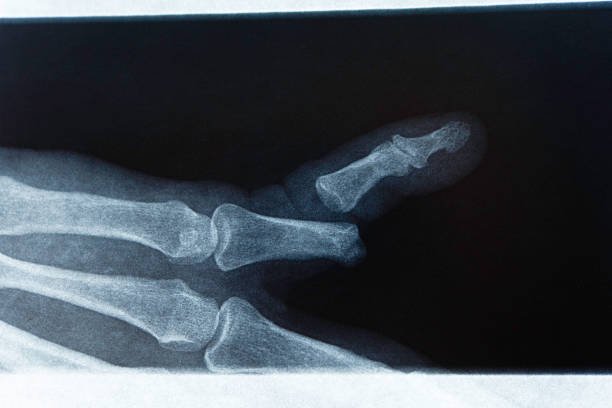
Treatment for finger fractures varies based on where the fracture is located, its severity, and whether it is displaced (out of alignment) or nondisplaced (aligned).
If you have a nondisplaced fracture, your doctor may splint your injured finger or tape it to the nearby finger (buddy taping). The splint ensures your finger stays straight and provides protection during healing. Typically, you’ll keep the splint for several weeks as your fracture heals. After that, you’ll need to avoid vigorous activity for several more weeks, but gentle movement is crucial to prevent stiffness. Your doctor might also recommend physical therapy to help restore your range of motion.
If you have a displaced fracture, your healthcare provider may immobilize your finger or thumb with a splint after realigning the broken fragments. This is usually done under local anesthesia, where a numbing solution, similar to dental anesthesia, is injected into the nerves at the base of your finger or thumb before positioning the bones correctly.
Medications for hand and finger fractures
To control pain and swelling, you can take:
- Paracetamol
- A non-steroidal anti-inflammatory drug (NSAID), such as ibuprofen or diclofenac
What are the immediate treatments for a broken finger?
If you suspect you’ve broken your finger or thumb, there are steps you can take while waiting to see a doctor. You should:
- Avoid moving your finger or thumb; taping it to the neighboring finger might help.
- Raise your hand to help decrease swelling.
- Use an ice pack or a bag of frozen peas wrapped in a tea towel for 15 to 20 minutes every 2 to 3 hours to help reduce swelling. Avoid this method if you have chilblains or Raynaud’s.
- Apply a clean dressing to cover your cut, if you have one.
- Take paracetamol to help ease the pain. When you see the doctor, they may suggest other, more potent painkillers if needed.
- Remove any rings from the hand that is affected.
What are effective ways to prevent finger fractures?
While fractures cannot always be avoided, you can lower the risk of hand and finger injuries by strengthening your bones through adequate calcium and vitamin D intake.
Ensure all your spaces are secure, properly illuminated, and tidy, including:
- Work space
- Gym or sports area
- Area for manual work tasks
- Area for doing chores at home
You are required to be supplied with training and safety gear at your workplace.
If you have osteoporosis, follow your doctor’s recommendations regarding:
- Diet
- Exercise
- Medicines
- A bone density test may be necessary if you have risk factors for fractures or osteoporosis.
Is Your Finger Broken?
Living with a broken finger or thumb
The prognosis varies based on your age, overall health, and the type and severity of your condition. While finger and thumb fractures usually heal well with proper treatment, physical therapy may be necessary to restore movement, which is essential for a good recovery. Although a broken finger or thumb might seem minor, it remains crucial. You might feel embarrassed or uncertain about seeking medical help, but it is essential to do so. Even minor injuries should be evaluated by a healthcare professional to assess the extent of the damage and determine appropriate treatment. Avoid treating a broken finger or thumb on your own.
Frequently Asked Questions
Can I manage a broken finger at home?
No. Without proper alignment and immobilization, broken fingers may heal incorrectly, leading to loss of function.
When is surgery needed for a broken finger or thumb?
You might require surgery for a fractured finger or thumb if you experience: an injury affecting a joint, loose bone fragments, multiple fractures, tendon or ligament damage, or unstable fractures that a splint cannot support. During the procedure, your surgeon uses screws, small plates, pins, or wires to stabilize the bones. Sometimes this hardware is temporary, such as pins or wires, which may be removed later. In other cases, it is permanent and remains in your finger or thumb unless it causes complications.
When is it considered too late to treat a broken finger?
Whenever possible, seek treatment from a doctor within a week of injury. Delaying care might impact your recovery and treatment options. Over time, your doctor might choose to let the bones heal in their current position or may perform surgery to correct any deformity.
How long does it typically take for a broken finger to heal?
Recovery from a finger or thumb fracture can range from several weeks to up to a year. The healing time depends on the severity of the injury and the chosen treatment plan. Your doctor will tell you when it is safe to start using your hand again. You might need daily rehab exercises, usually guided by a specialized hand therapist. These exercises help lessen swelling and stiffness, supporting a more successful recovery.
When is it necessary to consult a healthcare provider for finger or thumb pain?
Seek immediate care if you suspect a broken finger or thumb by visiting an urgent care center or the emergency department of a hospital.