
A summary of the signs of hair loss
Hair loss can manifest in various forms, depending on the underlying cause. It may occur suddenly or gradually, impacting just your scalp or your whole body.
Signs and symptoms of hair loss may include the following
- Gradual thinning Occurs at the top of the head.
- Bald spots Circular or patchy areas of hair loss.
- Sudden hair loss Rapid and unexpected loss of hair.
- Complete hair loss Loss of hair across the entire body.
- Scaling patches Areas of flaking or scaling that spread across the scalp.
Not sure these symptoms match yours?
Try our FREE symptoms checker to compare what your pain might
What exactly is hair loss?
Hair loss, or alopecia, may involve just the scalp or the whole body and can be either temporary or permanent. Causes include genetics, hormonal shifts, medical issues, or simply aging. While anyone can experience hair loss, it is more prevalent among men.
Baldness usually involves significant hair loss from the scalp. The most common cause is hereditary hair loss related to aging. Some individuals accept their hair loss without treatment or concealment. Others hide it using hairstyles, makeup, hats, or scarves. Additionally, some opt for treatments to stop further hair loss or promote hair regrowth.
Before starting hair loss treatment, consult your doctor to discuss the cause of your hair loss and available treatment options.
What causes hair loss?
People generally shed 50 to 100 hairs daily. This is not usually noticeable because new hair grows concurrently. Hair loss happens when the new hair fails to replace the fallen strands.
Hair loss is typically related to one or more of the following factors:
- Family history (heredity).
- Hormonal fluctuations and underlying medical conditions.
- Medications and supplements.
- Radiation therapy targeting the head.
- An extremely stressful event.
Still unsure what's causing your symptoms?
What are the risk factors linked to hair loss?
Various factors can contribute to a higher risk of hair loss, such as:
- A family history of balding on either your mother's or father's side.
- Age
- Substantial weight loss
- Radiation therapy targeting the head.
- Conditions such as diabetes and lupus
- Stress
- Inadequate nutrition
How do doctors diagnose hair loss?
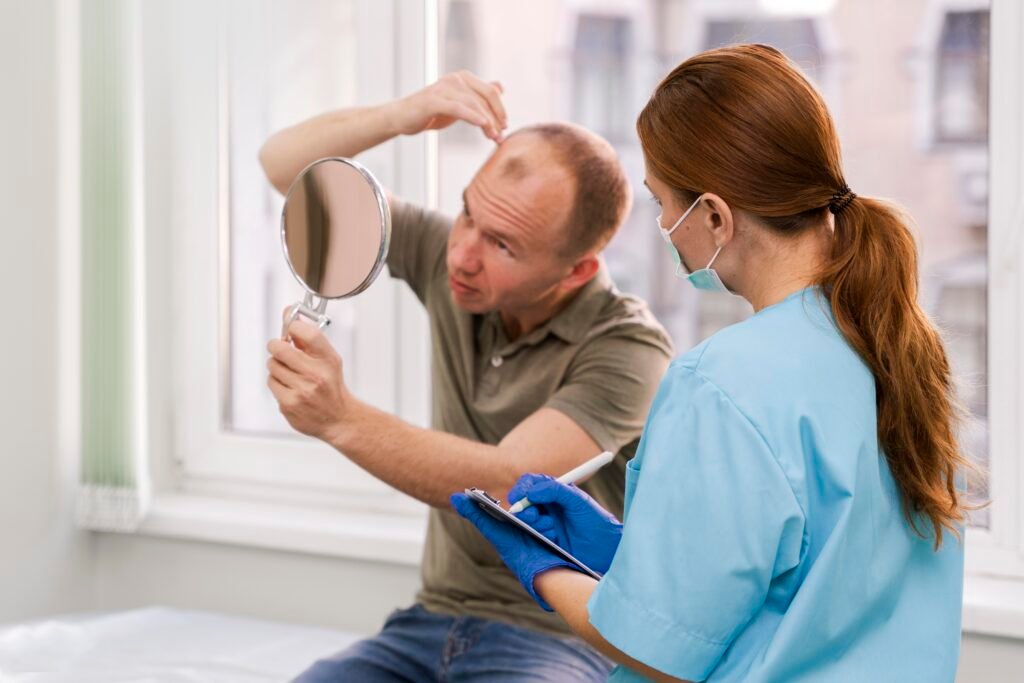
Before diagnosing, your doctor will probably perform a physical examination and inquire about your diet, hair care practices, and medical and family history. You might also need to undergo tests such as the following:
- Blood test: It may help diagnose medical conditions that lead to hair loss.
- Pull test: your doctor carefully pulls on several dozen hairs to assess how many fall out, helping to determine the stage of hair shedding.
- A scalp biopsy: involves your doctor scraping skin samples or plucking a few hairs to analyze the hair roots under a microscope. This procedure helps identify if an infection is contributing to hair loss.
- Light microscopy: involves using a specialized instrument to examine hairs cut at their roots. This technique helps detect potential hair shaft disorders.
What treatment options are available for hair loss?
Effective treatment options are available for certain types of hair loss, and in many cases, hair loss can be slowed or even partially reversed. For conditions such as patchy hair loss (alopecia areata), hair may regrow naturally within a year, even without medical treatment. Depending on the cause and severity, hair loss treatments may include medications, therapies, or cosmetic solutions.
Common treatment options include:
- Corticosteroids: Anti-inflammatory medications often used to treat autoimmune-related hair loss by reducing inflammation around hair follicles.
- Minoxidil (Rogaine®): A topical treatment commonly used for both male- and female-pattern hair loss to help stimulate hair growth and slow further thinning.
- Phototherapy: Uses controlled ultraviolet light from specialized devices to treat certain skin and hair conditions, including alopecia areata.
- Platelet-Rich Plasma (PRP) Therapy: A procedure that uses the patient’s own blood plasma to promote hair regrowth and improve hair thickness.
- Topical Immunotherapy: A treatment designed to trigger an immune response that may encourage hair regrowth in specific types of hair loss.
- Hairstyling Solutions: Options such as wigs, hairpieces, or hair weaves can help camouflage hair loss and improve appearance through strategic styling.
What are the best ways to prevent hair loss?
Most baldness results from genetics, including male and female-pattern baldness. This form of hair loss cannot be prevented.
These suggestions might help you prevent unnecessary hair loss.
- Handle your hair gently. Use a detangler and be careful not to tug when brushing or combing, especially on wet hair. A wide-toothed comb can reduce hair breakage. Stay away from harsh treatments like hot rollers, curling irons, hot-oil treatments, and permanents. Minimize tension from styles that use rubber bands, barrettes, or involve braiding.
- Consult your doctor about any medications and supplements you are taking that could lead to hair loss.
- Protect your hair from sunlight and other ultraviolet sources.
- Quit smoking. Certain studies link smoking to baldness in men.
- If you are undergoing chemotherapy, consult your doctor about using a cooling cap. This device can help lower your likelihood of hair loss during treatment.
Most baldness results from genetics, including male and female-pattern baldness. This form of hair loss cannot be prevented.
These suggestions might help you prevent unnecessary hair loss.
- Handle your hair gently. Use a detangler and be careful not to tug when brushing or combing, especially on wet hair. A wide-toothed comb can reduce hair breakage. Stay away from harsh treatments like hot rollers, curling irons, hot-oil treatments, and permanents. Minimize tension from styles that use rubber bands, barrettes, or involve braiding.
- Consult your doctor about any medications and supplements you are taking that could lead to hair loss.
- Protect your hair from sunlight and other ultraviolet sources.
- Quit smoking. Certain studies link smoking to baldness in men.
- If you are undergoing chemotherapy, consult your doctor about using a cooling cap. This device can help lower your likelihood of hair loss during treatment.
Not sure these symptoms match yours?
Try our FREE symptoms checker to compare what your pain might
Living with hair loss
Noticing hair loss can be distressing. Alopecia areata is a common condition that leads to hair loss on any part of your body. However, it typically affects the scalp—losing some hair when Most baldness results from genetics, including male and female-pattern baldness. This form of hair loss cannot be prevented.
These suggestions might help you prevent unnecessary hair loss.
- Handle your hair gently. Use a detangler and be careful not to tug when brushing or combing, especially on wet hair. A wide-toothed comb can reduce hair breakage. Stay away from harsh treatments like hot rollers, curling irons, hot-oil treatments, and permanents. Minimize tension from styles that use rubber bands, barrettes, or involve braiding.
- Consult your doctor about any medications and supplements you are taking that could lead to hair loss.
- Protect your hair from sunlight and other ultraviolet sources.
- Quit smoking. Certain studies link smoking to baldness in men.
If you are undergoing chemotherapy, consult your doctor about using a cooling cap. This device can help lower your likelihood of hair loss during treatment.shampooing or brushing is normal, as part of the hair growth cycle. However, if you have alopecia areata, you might see more hair falling out than usual, or not realize it until bald patches appear. If you notice hair loss, especially if it causes stress, anxiety, or depression, consult your healthcare provider promptly.
Still unsure what's causing your symptoms?
Frequently Asked Questions
What should I anticipate if I develop alopecia areata?
In mild cases of alopecia areata, you might encounter flare-ups and times when symptoms improve (remission). More severe forms, like alopecia areata totalis and alopecia areata universalis, tend to be less responsive to treatment.
Who is affected by alopecia areata?
Anyone can develop alopecia areata. However, the risk increases if you are a child, have a family history of the condition, or if you, your family members, or both have autoimmune disorders such as diabetes, lupus, or thyroid disease.
What is the prevalence of alopecia areata?
Alopecia areata is a common condition that affects nearly 7 million people in the United States. About 20% of cases occur in children. Among those with alopecia areata, 5% develop alopecia areata totalis, and 1% develop alopecia areata universalis. It ranks as the second most common type of hair loss, after pattern baldness, in both women and men.
Is alopecia areata contagious?
No, alopecia areata is not contagious. It cannot be transmitted via skin contact or through the air.
Is it possible to treat hair loss?
No, alopecia areata does not disappear. Medications and other treatments can help control hair loss, but they do not cure the condition. Alopecia areata totalis and universalis are more severe forms and tend to respond less effectively to treatment.
People generally shed 50 to 100 hairs daily. This is not usually noticeable because new hair grows concurrently. Hair loss happens when the new hair fails to replace the fallen strands.
Hair loss is typically related to one or more of the following factors: