
Quick overview of the typhoid symptoms
Symptoms of typhoid fever usually develop slowly, often emerging 1 to 3 weeks following contact with the bacteria.
Early signs of illness can include:
- A low fever that gradually rises during the day can persist for several days or weeks if untreated. It may reach 104 degrees Fahrenheit (40 degrees Celsius).
- Stomach pain.
- Chills.
- Headache.
- Weakness and fatigue.
- Muscle pain.
- Constipation or diarrhea.
- “Rose spots” rash, which consists of faint pink spots, usually shows up on your chest or stomach.
- Cough.
- Loss of appetite.
A few weeks after symptoms start, the illness can lead to intestinal complications. Symptoms may include:
- Abdominal pain.
- Swollen belly.
- Relapse of symptoms and fever.
What exactly is typhoid fever?
Typhoid fever is a severe infection that affects millions each year and is caused by a specific strain of Salmonella bacteria. Typhoid is often mentioned alongside paratyphoid fever, which has similar symptoms but tends to be less severe. Paratyphoid results from Salmonella Paratyphi (S. Paratyphi). These bacteria, S. Typhi and S. Paratyphi, differ from the strains responsible for salmonellosis, a common form of food poisoning.
Typhoid fever is uncommon in areas with low levels of bacterial carriers, where water is treated to remove germs, and where human waste is managed correctly. This explains why cases are rare in the United States. Most Americans who contract typhoid do so while traveling internationally. The highest rates are found in Africa and South Asia.
Antibiotics can be used to treat typhoid fever, but some have become ineffective against the bacteria that cause it. This phenomenon is called antibiotic resistance. Without proper treatment, the risk of death from complications is small but present. Vaccines that protect against typhoid fever reduce the chance of contracting the disease.
What are the causes of typhoid fever?
Salmonella enterica serotype Typhi is a bacterial strain that causes typhoid fever. Individuals infected with typhoid or carrying the bacteria can shed the bacteria through their stool.
Salmonella enterica serotype Typhi can be transmitted through untreated water and through raw foods such as unpeeled fruits. Bacteria may also be present in drinks such as water, untreated ice, and unpasteurized milk or juice. Beverages that are heat-treated to kill germs are pasteurized.
People can ingest bacteria if they are contaminated with food or water. Additionally, not washing hands thoroughly after using the restroom can lead to the spread of bacteria.
What are the risk factors linked to typhoid fever?
Typhoid fever presents a significant global health threat, especially to children. The highest incidence rates and outbreaks are reported in Africa and South Asia. Nevertheless, typhoid is globally distributed and is commonly transmitted by travelers moving to and from high-risk areas.
If you reside in a country where typhoid fever is rare, your risk of catching it increases if you:
- Travel to or work in regions where typhoid fever is common.
- Work in a laboratory that manages Salmonella enterica serotype Typhi bacteria or stores samples of it.
- Keep in regular contact with someone who is infected or has recently contracted typhoid fever.
How is typhoid fever diagnosed?
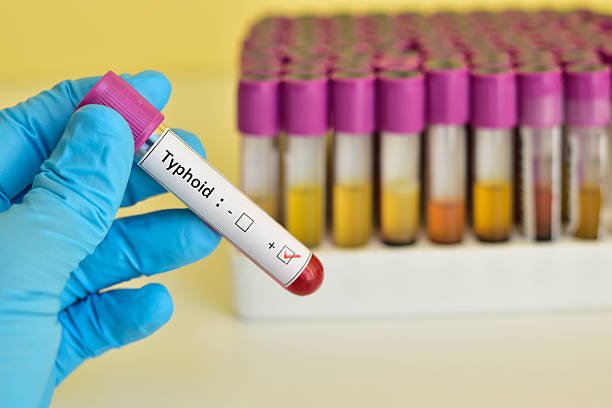
Your doctor will assess your symptoms, travel history, and lab results to diagnose typhoid fever. They will conduct a physical exam and listen to your heart and lungs. Additionally, your doctor may take samples of body fluids or tissue to test for S. Typhi. They might collect samples of your:
- Blood: A needle will be inserted into your arm by your doctor to collect a small blood sample into a tube.
- Poop (stool): Your doctor will give you a sterile container and instructions for collecting a sample.
- Pee (urine): You may be asked to provide a urine sample in a cup given by your healthcare provider.
- Skin: Your doctor may numb your skin and then collect a sample with a small razor or scalpel.
- Bone marrow: Your provider will numb your skin and use a special needle to collect a sample from inside your bones. This is the most sensitive diagnostic test and is performed when blood and stool cultures are negative, but the doctor still suspects typhoid based on the symptoms.
Your doctor may also order X-rays (images of the inside of your body) if pneumonia or intestinal perforation is suspected.
What treatment options are available for typhoid fever?
Antibiotics are the primary treatment for typhoid fever. They can help you recover more quickly and lower the chance of complications. If not treated, the fever could persist for weeks or months.
The medication for typhoid fever can vary depending on the severity of the illness and the infection site. Occasionally, certain antibiotics do not work against the bacteria. These bacteria are called antibiotic-resistant and pose a challenge in treating typhoid.
Antibiotics effective against typhoid fever include:
- Fluoroquinolones: such as ciprofloxacin (Cipro), are antibiotics that might be a first option. They inhibit bacteria from replicating.
- Cephalosporins: are a class of antibiotics that inhibit bacteria from building their cell walls. Ceftriaxone, a specific type, is used primarily in cases of antibiotic resistance.
- Macrolides: are antibiotics that inhibit bacteria from producing proteins. One specific type, azithromycin (Zithromax), is effective against antibiotic-resistant strains.
- Carbapenems: are antibiotics that inhibit bacteria from building their cell walls. This class of antibiotics can be effective in treating severe typhoid fever when other treatments have failed, in severe MDR/XDR cases, and requires direct supervision by a doctor in an inpatient hospital setting.
Other treatment options include surgery. If your intestines or blood vessels are damaged, surgery may be necessary to repair them.
What are the ways to prevent it?
Getting vaccinated can help prevent typhoid fever. You might consider the vaccine if you’re in an area with frequent typhoid cases or if you are planning to visit a high-risk region.
The available vaccine, ViCPS (Vi Capsular Polysaccharide Vaccine), requires a single shot and provides at least 1 week of protection before travel. It is suitable for people aged two and older and remains effective for two years. A newer vaccine, the TCS (Typhoid Conjugate Vaccine), provides longer-lasting protection, i.e., up to 3 years or even longer. The WHO now recommends it for adults and children aged 6 months and older. Alternatively, taking 4 capsules of Ty21a orally every other day for 7 days is possible. This method is ideal for those aged 6 and older and protects for up to 5 years.
The vaccine does not offer complete protection against typhoid fever. Therefore, follow these guidelines when visiting high-risk areas:
- Wash your hands: thoroughly and often with soapy water for at least 20 seconds. Do this before eating or preparing food, and after using the bathroom or changing a diaper. Keep an alcohol-based hand sanitizer with you for moments when soap and water are unavailable.
- Avoid unsafe water sources: In regions with high typhoid rates, local drinking water may harbor the bacteria responsible for the illness. Therefore, opt for bottled water, canned or bottled carbonated beverages, wine, or beer. Ask for drinks without ice. Use bottled water to brush your teeth and avoid swallowing any water during showers.
- Avoid eating raw fruits and vegetables: especially those you can’t peel like lettuce, since they may have been washed in contaminated water.
- Opt for hot foods: and steer clear of items stored or served at room temperature. Foods that are cooked and steaming hot are generally safer than other options.
- To prevent the spread of infection: especially when recovering from typhoid fever, take measures to protect others.
- Take your antibiotics: as directed by your doctor and ensure you finish the entire prescribed course.
- Do not handle or prepare food: for others until your doctor confirms it is safe. If you are a food or healthcare worker, you might need to take a test to make sure you’ve stopped shedding typhoid bacteria before returning to work.
This is the heCheck Your Typhoid Symptoms Nowading
Conclusion
After recovering from typhoid fever, it is crucial to follow up with your healthcare provider to confirm that you are no longer contagious. Watch for signs of relapse, as additional antibiotic treatment may be needed if symptoms return or if you remain contagious. Although typhoid might seem like a disease of the past, it still causes serious illness worldwide. If you are in or traveling to an area where typhoid is common, vaccination is the best way to prevent infection and curb transmission. If you suspect you have typhoid, seek medical attention immediately. And once you have recovered, get tested to ensure you are not unknowingly spreading the disease.
Frequently Asked Questions
How is typhoid fever transmitted?
Typhoid fever usually spreads through food or water contaminated with S. Typhi. This can happen if an infected person touches food or drinks without washing their hands. It may also occur if wastewater containing feces or urine contaminates drinking water or food. You can get typhoid from an infected person if they don’t wash their hands after using the bathroom. Bacteria can remain on surfaces like phones or doorknobs after infected individuals touch them, potentially transferring them to the next person who handles those objects.
Is it possible to remain contagious with typhoid fever even after recovery?
Unlike many other illnesses, typhoid can remain contagious even after symptoms have disappeared. Approximately 5% of recovered individuals remain carriers for a year or longer. This condition is known as a long-term carrier. It is crucial to get tested after feeling better to prevent the risk of spreading typhoid to others.
When is it safe to go back to work or school after recovering from typhoid fever?
Depending on your workplace, you might not be permitted to return until you test negative for S. Typhi. Even if you feel better, you can still transmit typhoid to others. Check with your employer or school to understand the required steps for your return.
What is the usual duration of typhoid fever?
Typhoid fever usually lasts 7-10 days when treatment begins promptly after symptoms start. If untreated or delayed, the illness may last three weeks or longer. Complications or relapses could extend the recovery time.
Is typhoid fever deadly?
Typhoid can be fatal if not treated quickly. However, modern medicines enable most people to survive and recover fully. Among the millions diagnosed each year, about 1% to 2% of cases end in death. Without treatment, typhoid-associated mortality rates may be as high as 10-20%.