
Brief overview of skin cancer symptoms
Signs and symptoms of skin cancer include:
- Skin growth A new growth that could resemble a mole, bump, or scab.
- Blemish A blemish or uneven area on the skin.
- Sore A skin sore that refuses to heal.
- Mole changes Changes in a mole or freckle, such as growth or a change in color.
- Itchiness Itchy skin surrounding a skin growth.
- Pain Pain surrounding a skin growth.
Not sure these symptoms match yours?
Try our FREE symptoms checker to compare what your pain might
What exactly is skin cancer?
Skin cancer originates in the skin, with abnormal cells that can invade and damage healthy tissue. Occasionally, these cells break apart and spread to other areas of the body.
Various types of skin cancer are present, with basal cell carcinoma and squamous cell carcinoma being the most common. Despite their prevalence, these types are often treatable. The most severe and dangerous form is melanoma, which has a higher tendency to spread and complicate treatment.
Most skin cancers develop on skin exposed to a lot of sunlight. Sunlight is believed to be the primary cause of most skin cancers. To lower your risk, wear protective clothing or use sunscreen to shield your skin from the sun.
Certain skin cancers develop on areas that usually do not receive sun exposure. This suggests that other factors may be involved. To lower your risk of these cancers, inspect your skin regularly for any changes and inform your doctor of any changes you notice.
Most skin cancers result from exposure to sunlight, which contains ultraviolet light. Tanning beds and lamps can also emit this type of light. Ultraviolet radiation damages DNA in skin cells, increasing the risk of skin cancer.
Not all skin cancers develop on sun-exposed skin, indicating other causes are involved. The exact causes of skin cancer are often unclear, but healthcare professionals recognize risk factors such as a weakened immune system and a family history of the disease.
Skin cancer begins when skin cells undergo DNA changes. A cell’s DNA contains instructions that direct its functions. In healthy cells, DNA guides growth and multiplication at a controlled rate and signals when the cells should die.
In cancer cells, DNA mutations lead to altered instructions that command the cells to grow and divide rapidly. Unlike healthy cells, cancer cells can survive longer, resulting in an overproduction of cells.
Cancer cells can invade and damage healthy tissue. Over time, they can detach and travel to different parts of the body, a process known as metastatic cancer.
Still unsure what's causing your symptoms?
What are the factors that increase the risk of skin cancer?
Factors that may increase the risk of skin cancer include the following:
- Skin that burns quickly in the sun: While anyone can develop skin cancer regardless of skin tone, those with skin that sunburns easily face a greater risk. The risk increases for people with blond or red hair, light-colored eyes, or freckles.
- Sunlight: emits ultraviolet light, which raises the risk of skin cancer. Wearing clothing or applying sunscreen can reduce this risk.
- Light from tanning beds: People who use indoor tanning beds face a higher risk of skin cancer because the lights emit harmful ultraviolet radiation.
- A history of skin cancer: increases the likelihood of recurrence, as individuals who have had it before are much more prone to develop it again.
- A history of sunburns: especially blistering ones, raises the risk of skin cancer. Sunburns during childhood further elevate this risk in adulthood.
- Having a family history of skin cancer: means that if a blood relative, like a parent or sibling, has had it, your risk of developing skin cancer could be higher.
- A weakened immune system: can raise the risk of skin cancer, especially if caused by medication or disease. People with compromised immunity include individuals on immunosuppressant drugs, such as organ transplant recipients, and those with health conditions like HIV infection, which also impair immune function.
What methods are used to diagnose skin cancer?
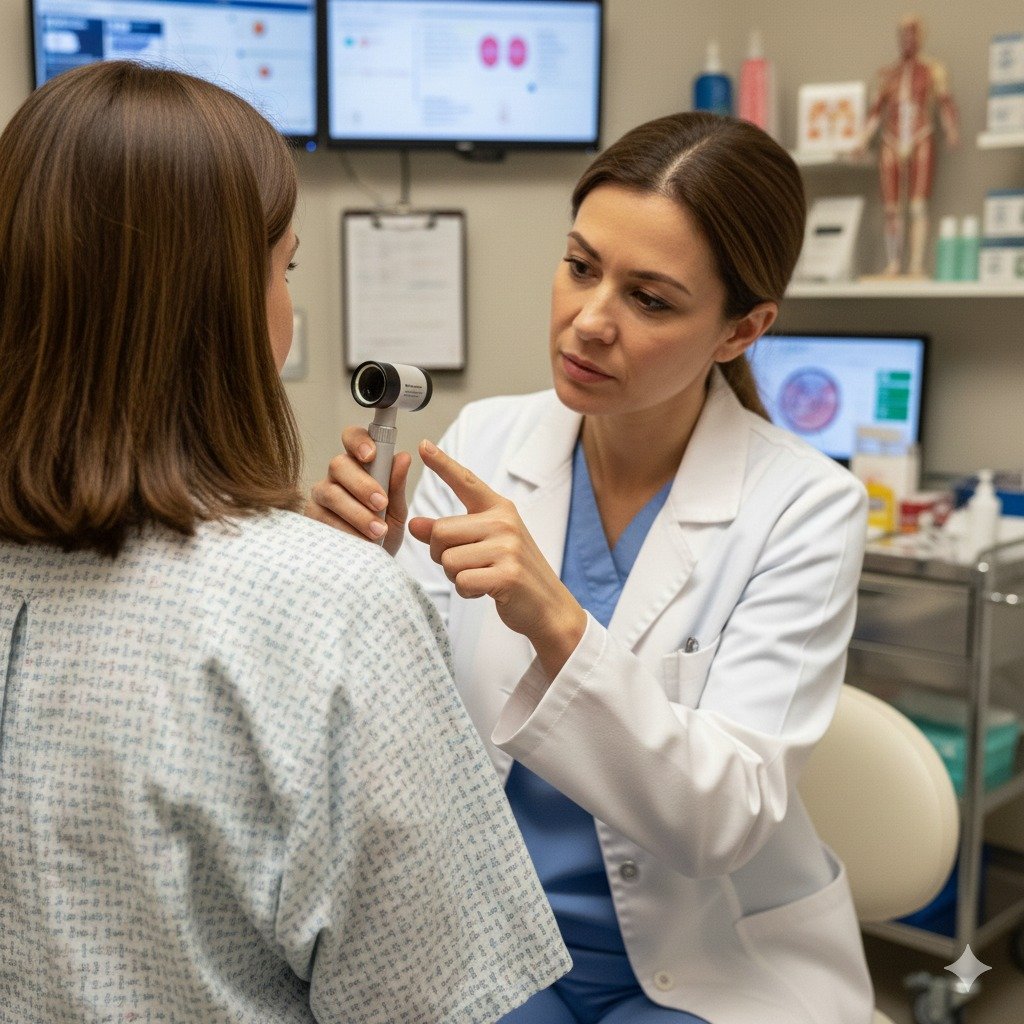
A skin cancer diagnosis typically starts with a skin examination. Sometimes, a doctor may take a small skin sample to test for cancer.
- Skin cancer exam: A doctor might begin by inquiring about your symptoms and inspecting your skin.
- A skin cancer biopsy: is a procedure where a tissue sample is taken and sent to a lab for testing to check for the presence of cancer cells.
What are the available treatments for skin cancer?
Skin cancer treatment options include surgery to excise the tumor or topical treatments to eliminate cancer cells. In some instances, more aggressive approaches are necessary, such as radiation therapy, chemotherapy, targeted therapy, and immunotherapy.
Skin cancer treatments may consist of:
- Skin creams
- Curettage combined with electrodessication
- Photodynamic therapy
- Surgery
- Mohs surgery
- Radiation therapy
- Chemotherapy
- Targeted therapy
- Immunotherapy
Not sure these symptoms match yours?
Try our FREE symptoms checker to compare what your pain might
What are the ways to prevent skin cancer?
Protecting yourself from the sun can prevent most skin cancers. To lower your risk of skin cancer, you can:
- Avoid staying in the sun at midday.
- Wear sunscreen throughout the year.
- Wear protective clothing, such as dark, tightly woven garments that cover your arms and legs.
- Avoid using tanning beds.
- Examine your skin regularly and inform your healthcare team of any changes.
- Examine your chest, trunk, and the front and back of your arms and hands.
Living with skin cancer
Anyone can develop skin cancer. What appears as a harmless cosmetic flaw might actually be a warning sign. Everyone must perform regular skin self-examinations, particularly if you are at higher risk. Your skin, the body’s largest organ, requires the same care as other parts of your body. Inspect your skin monthly for any alterations in moles or new growths. Protect your skin from sun damage and schedule regular check-ups with your dermatologist.
Still unsure what's causing your symptoms?
Frequently Asked Questions
How frequently does skin cancer occur?
Skin cancer is the most frequently diagnosed form of cancer in the United States. In fact, roughly 1% of people will develop skin cancer at some stage in their lives.
Is it possible to cure skin cancer?
The likelihood of curing skin cancer mainly relies on its type and the stage at diagnosis. Detecting it early greatly increases the chances of successful treatment. For instance, basal cell carcinoma and squamous cell carcinoma have high cure rates when identified early. Melanoma can also be effectively treated if caught promptly, though it becomes more challenging to treat at later stages. Regular screenings and immediate treatment upon detection are essential for better outcomes.
Are all moles cancerous?
Most moles are harmless and non-cancerous. Some are present at birth, while others typically develop by age 40. Usually, adults have 10 to 40 moles. Although rare, some moles can become melanoma. Having more than 50 moles increases your risk of developing melanoma.
Why is skin cancer more common in areas of the body that are not exposed to the sun among people of color?
Scientists remain uncertain about why individuals with darker skin tones are more likely to develop cancer in areas not exposed to sunlight, such as the palms and soles. They believe sunlight plays a minor role. Yet, dermatologists still observe many cases of UV-related melanomas and squamous cell skin cancers across all skin tones, from fair to very dark.
What makes skin cancer potentially life-threatening?
You might wonder how skin cancer originating on the surface can become fatal. It may seem logical to think that removing the cancer cells by peeling off the skin or doing minor surgery would be enough. These methods work well if the cancer is detected early. However, if skin cancer is not found early, what looks like a surface issue can grow deeper and spread beyond the initial site. The primary type of cancer and the original cancer cells define its classification. For instance, if malignant melanoma spreads to your lungs, it is still classified as malignant melanoma. This illustrates how superficial skin cancer can turn into a life-threatening condition.