Quick overview of breast cancer symptoms in women:
Signs and symptoms of breast cancer may include:
Lump or hardened spot A lump on the breast that feels distinct from the surrounding tissue.
Nipple changes A nipple that looks flattened or pulls inward.
Skin color changes Breast skin may become red, inflamed, warm to the touch, or show pigmentation changes. Appearance can vary across skin tones—pink or red in white skin, darker than the surrounding chest, red, or purple in brown or Black skin.
Breast shape or size modification Any change in the size, shape, or appearance of a breast.
Skin texture changes Dimples, puckering, or an orange-peel texture on the breast skin.
Peeling or scaling Peeling, scaling, crusting, or flaking of the skin on the breast.
- any signs or symptoms, see your doctor promptly for a checkup.
What exactly is breast cancer?
Breast cancer is among the most frequent cancers affecting women. It develops when malignant cells in the breast multiply and form tumors. In essence, it starts as an abnormal growth of cells within the breast tissue. Survival rates for breast cancer are rising, and deaths are slowly decreasing. This improvement mainly stems from broader support for breast cancer awareness and increased research funding.
Progress in breast cancer screening allows doctors to diagnose the disease earlier. Early detection of tumors enhances the likelihood of successful treatment. Although some cases of breast cancer may not be curable, numerous treatments exist to extend patients’ lives. Innovations in breast cancer research help clinicians choose the most effective treatment strategies.
What are the causes and risk factors of breast cancer?
Experts understand that breast cancer develops when breast cells mutate into cancerous cells that divide and form tumors. The exact cause of these mutations remains unknown. However, research suggests that certain risk factors can increase the likelihood of developing breast cancer. These include:
- Age: 55 years or older.
- Sex: Women are much more likely to develop the condition compared to men.
- Family history: Having parents, siblings, children, or other close relatives with breast cancer increases your risk of developing the disease.
- Genetics: As many as 15% of breast cancer cases are due to inherited genetic mutations, with the BRCA1 and BRCA2 genes being the most frequently affected.
- Smoking: Tobacco use has been linked to several types of cancer, such as breast cancer.
- Alcohol consumption: Studies indicate that consuming alcoholic beverages could raise the risk of breast cancer.
- Obesity raises the likelihood of developing breast cancer.
- Radiation exposure: Individuals who have previously undergone radiation therapy, particularly targeting the head, neck, or chest areas, face an increased risk of breast cancer.
- Hormone replacement therapy: People undergoing hormone replacement therapy (HRT) face a higher risk of being diagnosed with the condition.
What are the factors that increase the risk of developing breast cancer?
Factors that may increase the risk of breast cancer include:
- Starting your period at a younger age: increases the risk of breast cancer, especially if it begins before age 12.
- Starting menopause later in life: particularly after age 55, increases the risk of breast cancer.
- Dense breast tissue: consists of both fatty and dense components, where the thick part includes milk glands, ducts, and fibrous tissue. If your breasts are dense, they have more dense tissue than fat. Consult your healthcare provider about supplementary screening methods beyond mammograms to screen for breast cancer.
- Having your first child after age: 30 may increase the risk of breast cancer.
- Never having been pregnant: increases the risk of breast cancer, whereas having been pregnant one or more times reduces it but does not eliminate it.
- Menopausal hormone therapy: uses targeted hormone medications to manage symptoms, but it might increase breast cancer risk. This risk is associated with treatments containing both estrogen and progesterone. The danger decreases after discontinuing the medication.
How is breast cancer diagnosed?
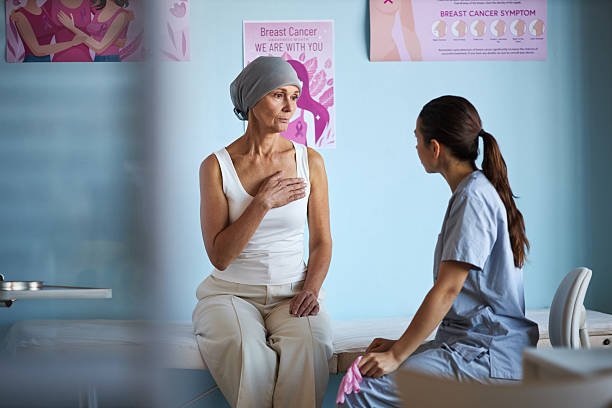
Breast cancer diagnosis usually starts with a physical exam and an overview of your symptoms. But sometimes, a patient may be asymptomatic and diagnosis may be made on routine imaging for screening. Imaging procedures can detect breast tissue abnormalities. To verify if cancer exists, a tissue sample from the breast is collected for analysis.
Breast examination
During a clinical breast exam, a doctor examines the breasts for any abnormalities, such as skin or nipple changes. They then palpate the breasts to feel for lumps and check the area along the collarbones and around the armpits for irregularities.
Mammogram
A mammogram is an X-ray of breast tissue, primarily used for breast cancer screening. If something unusual appears during a screening, a more detailed test called a diagnostic mammogram may be performed, often involving a closer examination of both breasts.
Breast ultrasound exam
Ultrasound uses sound waves to create images of internal body parts. A breast ultrasound provides your healthcare team with extra information about a breast lump, such as determining whether it is a solid mass or a fluid-filled cyst. This helps the team decide which tests may be needed next.
Breast MRI
MRI machines utilize magnetic fields and radio waves to generate images of the body’s interior. A breast MRI offers higher detail images of the breast and is occasionally used to check the affected breast for cancer indicators closely. It can also serve as a screening tool for the other breast. Typically, a dye injection is administered before the scan to improve tissue visibility in the resulting images.
What are the methods used to treat breast cancer?
Surgery is the primary treatment for breast cancer; however, healthcare providers may also consider other options. Types of breast cancer surgeries include:
- Mastectomy.
- Lumpectomy.
- Breast reconstruction.
Your doctors may combine surgery with one or more of the following treatments:
- Chemotherapy.
- Radiation therapy, such as intraoperative radiation therapy (IORT).
- Immunotherapy.
- Hormone therapy, such as selective estrogen receptor modulator (SERM) therapy.
- Targeted therapy.
What strategies can help prevent breast cancer?
Here are some steps you can take to lower your risk of developing breast cancer. Adjusting your daily habits could help reduce your chances. Consider trying to:
- Consult with your doctor: or healthcare provider about when to begin breast cancer screening. Inquire about the benefits and potential risks. Collaborate to decide which screening tests are best suited for you. Your doctor may suggest periodic screening ultrasounds or mammograms if you have a history of breast cancer in yoir immediate family, or you have certain other strong risk factors.
- Get to know your breasts: by doing regular self-examinations to boost awareness. These checks allow you to explore your breasts more thoroughly when necessary. If you detect any new changes, lumps, or other unusual symptoms, reach out to your doctor right away.
- Consume alcohol carefully: ideally in moderation. Limit yourself to no more than one drink per day if you choose to drink. Even small quantities of alcohol can be risky for breast cancer prevention. If you’re highly concerned about your breast cancer risk, think about abstaining completely.
- Exercise consistently: aiming to be active on most days of the week. Target at least 30 minutes of activity on these days. If you’re new to exercising, consult a doctor beforehand and start slowly.
- Limit menopausal hormone therapy: use, as combination therapy may raise breast cancer risk. Consult a doctor to discuss the benefits and risks of hormone therapy.
- Maintain a healthy weight: by keeping your current weight if it suits you. If weight loss is necessary, consult a doctor for safe methods. Reduce your calorie intake and gradually increase your physical activity.
- Preventive medicines: such as estrogen-blocking drugs, can reduce breast cancer risk in high-risk individuals. This includes selective estrogen receptor modulators and aromatase inhibitors, which are also employed as hormone therapies for breast cancer.
- Preventive surgery: might be considered if you have a significantly high risk of breast cancer. This could involve a prophylactic mastectomy, where the breasts are removed, or a prophylactic oophorectomy, which entails removing the ovaries. The ovarian removal decreases the chances of developing both breast and ovarian cancers.
Check Breast Cancer Symptoms Now
Living with breast cancer
Researchers continually collect data to help healthcare providers customize treatments for each individual. Trust your medical team to stay up to date on new approved therapies that may be appropriate for you. Remember, if you have breast cancer, your healthcare team will support you throughout every stage, from diagnosis onward. Living with breast cancer can be tough, and some days may feel overwhelming. To care for yourself during diagnosis and treatment, consider these tips: get enough rest, since breast cancer and its treatments can be exhausting; rest whenever needed, not just when you have free time. Eat a balanced diet, as treatment may impact your appetite; focus on fruits, vegetables, lean proteins, and healthy grains to stay strong. Manage stress, because cancer can be stressful, but activities like regular walks or exercise routines can help. Seek support; you are considered a breast cancer survivor from the moment of diagnosis. Ask your doctor about survivorship programs to help you navigate the challenges of living with breast cancer.
Frequently Asked Questions:
What is the likelihood of surviving breast cancer?
Breast cancer survival rates vary based on factors such as whether the cancer is invasive or noninvasive, the type of cancer, and its stage at the time of diagnosis. According to the National Cancer Institute (U.S.), the overall five-year survival rate for breast cancer patients is 91%. The institute also breaks down survival rates by stage: Local, where the cancer has not spread beyond the breast; Regional, where it has spread to nearby lymph nodes and tissues; and Distant, where it has reached distant organs like the liver or lungs.
How long can you have breast cancer without realizing it?
You might have breast cancer for years without noticing any signs, such as a lump. However, not every lump or bump is cancerous, many lumps may be benign. If you find an unusual lump or mass that lasts longer than a few days, see a doctor.
Can men get breast cancer?
Yes, men can get breast cancer, but it is rare. About 2,600 men are diagnosed with male breast cancer each year in the United States, making up less than 1% of all breast cancer cases.
What possible complications can arise from breast cancer?
The most severe complication is metastatic breast cancer, which occurs when the cancer spreads to other parts of the body, such as the brain, bones, liver, and lungs. Research indicates that approximately one-third of women with early-stage breast cancer eventually develop metastatic disease.
What might a lump in my breast mean?
Various conditions can cause lumps in the breast, including cancer. Nonetheless, the majority of breast lumps stem from other medical issues. Two prevalent causes are the fibrocystic breast condition and cysts. Fibrocystic condition results in benign changes, making the breasts feel lumpy, tender, and sore. Cysts are tiny fluid-filled sacs that can form inside the breast.