
Allergies
Overview
Millions of individuals worldwide suffer from allergies. They may interfere with daily comfort, employment, education, and sleep. Mild sneezing to serious breathing issues are among the symptoms.Many people mistake allergies for illnesses or colds. You can avoid severe reactions by being aware of your triggers. When your immune system overreacts, allergies result.It interprets innocuous chemicals as harmful intruders. Histamine is one of the compounds released by this process.Mucus production, swelling, and itching are all brought on by histamine. Comfort and long-term management are enhanced by early care.
Allergies What Are They?
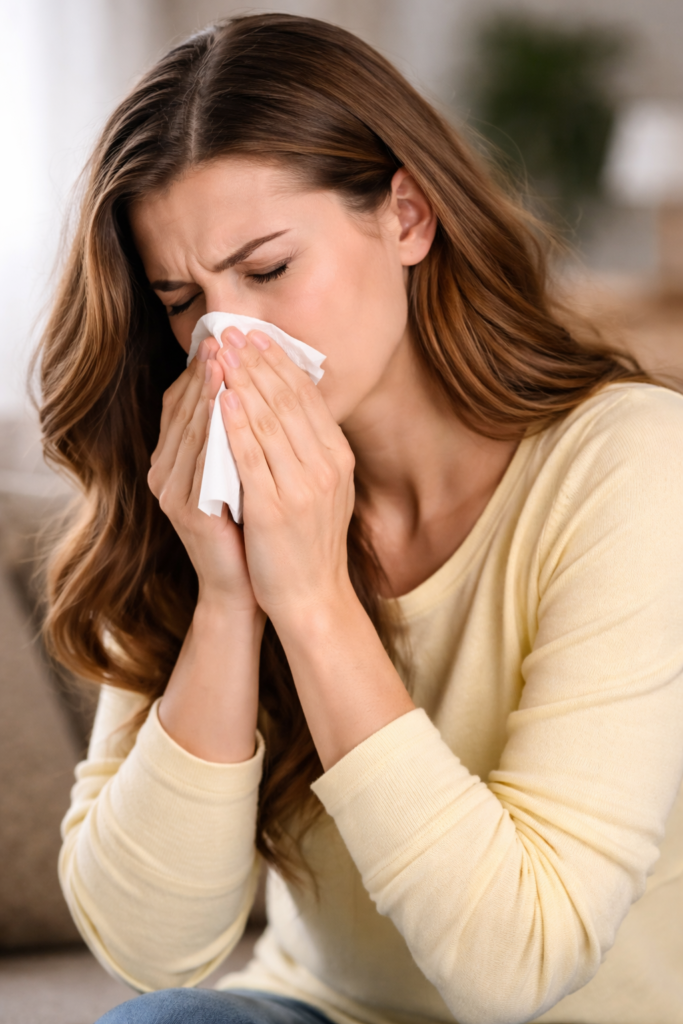
An immune system reaction to an innocuous substance is called an allergy. We refer to these materials as allergens. Foods, dust mites, pollen, and pet dander are examples of common allergies. Some folks have moderate reactions. Others might experience potentially fatal responses.Allergies may impact the digestive system, eyes, lungs, nose, or skin. It could take minutes or hours for symptoms to manifest. They can result in anaphylaxis in extreme circumstances. Anaphylaxis requires emergency attention right away.Lives can be saved by prompt medical attention.
How Frequently Do Allergies Occur?
Worldwide, the prevalence of allergic disorders is rising. Both adults and children are impacted. Pollution of the environment may exacerbate symptoms. The risk is increased by family history. Allergy rates are higher in urban areas. Particularly prevalent are seasonal allergies. Millions of children suffer from food allergies.Hospitals frequently receive reports of drug allergies. Animal
enthusiasts often have pet allergies. An accurate diagnosis avoids needless limitations.
Sensitivity of the immune system.
Genetics is a major factor.The child’s risk rises if one parent has allergies. Exposure to the environment is also important. Sensitisation can be brought on by repeated exposure. Typical reasons include: Pollen from grass, weeds, and trees Dust mites Spores of mouldDander from animals Some foods Stings from insects Drugs Weather changes might aggravate symptoms. Airway inflammation is increased by air pollution. Reactions may become more intense under stress.Changes in hormones can occasionally impact severity. Immune equilibrium is also influenced by lifestyle choices.
Allergy Types
Allergies that are seasonal
Seasonal allergies happen at particular seasons of the year. They are frequently connected to exposure to pollen.
Allergies that never go away
All year long, perennial allergies might arise. Pet dander and dust mites are frequent causes.
Allergies to Food
After consuming particular foods, food allergies develop. Shellfish, eggs, milk, and peanuts are common triggers.
Allergies to Drugs
Medication can cause reactions in certain people. Common triggers include antibiotics. Swelling and skin rashes are possible.
Allergies to the skin
SkinItching and redness are symptoms of skin allergies. After coming into contact with allergens, contact dermatitis develops.
Allergy to the Sun
Sensitive individuals may experience skin responses when exposed to sunlight. Photosensitivity is another name for this disorder. Safety is crucial.
Symptoms of Allergies
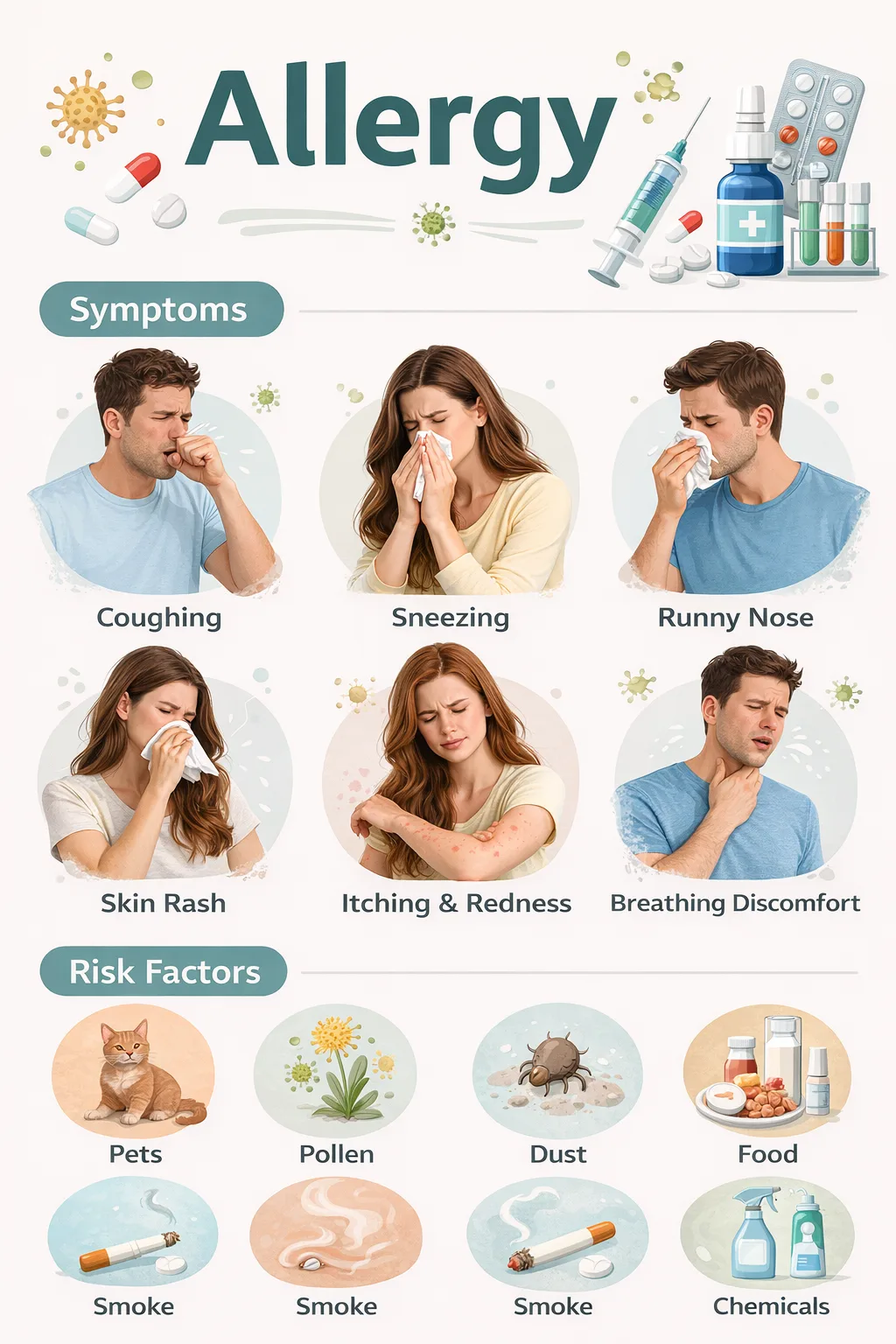
These are the most common symptoms, especially with seasonal allergies or dust allergies.
• Sneezing frequently
• Runny or blocked nose
• Itchy nose
• Postnasal drip
• Sinus pressure or headache
These symptoms are typical in conditions like allergic rhinitis.

Allergies vs. the Cold
Many people mistake allergies for illnesses. People frequently search for [cold vs. allergies]. Viruses are the cause of colds. Immune reactions are what cause allergies. Body pains and fever are common symptoms of colds. Watery eyes and itching are common symptoms of allergies. Colds get better in ten days. As long as exposure lasts, allergies will continue to develop. Allergy mucus is usually clear. Appropriate treatment is guided by a correct diagnosis.
Identification of Allergies
Medical history is where doctors start. They enquire about triggers and timing. The next step is a physical examination. Certain allergens are confirmed by allergy testing. A precise diagnosis avoids the need for extra drugs.
Allergies Tests and Diagnosis
Skin prick testing is frequently used. Tiny quantities of allergens are applied to the skin. IgE antibodies are measured by blood testing. Food triggers can be found with the aid of elimination diets. Under supervision, challenge tests are conducted.
ICD Numbers
Standardised codes are used by physicians in their paperwork. ICD-10 codes are used for common allergies. The kind determines the specific codes.Insurance claims are supported by correct coding. Accurate medical documentation is required.

Allergies Treatment
The intensity determines the course of treatment. The first stage is avoidance.Reducing exposure lessens the severity of symptoms. Inflammation is managed with medication. For severe allergies, emergency plans are essential.
Top Allergy Medicines
People look for [best allergy medicine] all the time. Antihistamines lessen itching and sneezing. Congestion is relieved with nasal sprays. Decongestants reduce tissue oedema. Always seek medical advice.
Drops for Allergies
Immunotherapy alters the immune system. Under supervision, some patients utilise [allergy drops]. Over time, this treatment increases tolerance. It might lessen the need for long-term drugs.Success requires consistency.
Holistic Care
A lot of people enquire about [holistic treatment for allergies]. Immune equilibrium is supported by lifestyle modifications. Clear nasal passages are rinsed with saline. Indoor allergies are lessened with air purifiers. A healthy diet aids in recuperation.
Cat Allergy
MedicationAllergies can also affect pets. Owners frequently look up [cat allergy medication].A veterinary assessment is required. Itching and hair loss are among the symptoms.Never give pets human medication.

Managing Allergies
The quality of life is enhanced by daily management. When pollen counts are high, keep windows closed. Use hot water to wash bedding once a week. Cover mattresses with dust-proof material. Keep track of symptoms to spot trends. If recommended, keep emergency medication on hand. Notify coworkers and teachers about serious allergies. Carefully read food labels. When travelling, make a plan in advance. Adhere to treatment plans consistently.
Issues
Allergies that are left untreated may get worse over time. It is possible for sinus infections to become chronic. Allergy sufferers are more likely to develop asthma. Airway blockage may result from severe reactions. Complications are decreased by prompt treatment. Chronic headaches can be brought on by repeated nasal pressure. Productivity is impacted by chronic weariness. Disturbances in sleep are frequent. Children may have academic difficulties. Long-term problems are avoided with early management.
Allergies and Disability
Many ask, [is Allergies a disability].Mild allergies usually are not classified as disabilities.Severe allergies may qualify in specific cases.Workplace accommodations may be necessary.Legal definitions vary by country.
Allergies vs Mental Health Conditions
Some search terms compare allergies with psychiatric disorders.
For example, [Allergies vs borderline personality disorder].These conditions are unrelated.Borderline personality disorder affects emotional regulation. Allergies involve immune system reactions.Similarly, searches like [is bipolar a personality disorder] appear. Bipolar disorder is a mood disorder.It differs completely from allergic disease.Mental health and immune conditions require separate care. Accurate understanding prevents confusion.
Celebrities With Allergies
Public figures also manage allergies.Searches for [celebrities with Allergies] are common. Many share experiences publicly. Awareness reduces stigma. Education improves preparedness. Some searches include:
[famous people celebrities with Allergies],[famous stars with Allergies] [Allergies and celebrities] [Allergies celebrity] [Allergies in celebrities] [celebrities and Allergies] [famous personalities having Allergies]
Their openness encourages others to seek help.
Allergies affect people from all walks of life. Early diagnosis supports better outcomes. Public awareness campaigns improve safety. Community education saves lives.
When to Get Emergency
Assistance If you have trouble breathing, get help. Urgent attention is required for swollen lips or throats. Severe response is indicated by dizziness or fainting. If prescribed, provide epinephrine. Make an instant emergency service call.
Tips for Prevention
Steer clear of recognised allergies at all costs. Track pollen predictions every day. Maintain a modest level of indoor humidity. Regularly clean the air filters. Allergies are not prevented by vaccinations. Immunity is strengthened by healthy practices. A well-balanced diet promotes general health.
FAQS
Is coughing a symptom of allergies?
Indeed. The lining of the throat is irritated by postnasal drip.
Do allergens cause fatigue?
Indeed. Fatigue is brought on by inflammation and insufficient sleep.
Can headaches be brought on by allergies?
Indeed. Pressure ache is caused by sinus congestion
Do allergies last a lifetime?
Some get better as they get older.Others endure a lifetime.
Examine Your Symptoms Uncertain whether it's an infection or an allergy?
For a week, keep a record of your symptoms. Take note of pollen or pet exposure. Keep a meticulous record of your dietary intake.