
Dizziness Disorders
Overview
Dizziness disorders affect the body’s ability to maintain balance and spatial awareness. Dizziness may feel like lightheadedness, unsteadiness, or a spinning sensation (vertigo). These symptoms can occur suddenly or develop gradually. Many people experience dizziness due to various health conditions. While some causes are harmless, others may indicate serious underlying problems. Identifying the cause is important for proper treatment. Dizziness is not a disease itself but a symptom of many conditions, including neurological disorders and inner ear problems.

What Are Dizziness Disorders?
Dizziness disorders are disorders that affect balance, coordination or movement. The inner ear, brain or the nervous system can cause these disorders. The eyes, muscles and inner ear send signals that the body uses to keep the body in balance. Where there is a conflict between these
signs, there is dizziness. The disorders can affect day to day life. Even such trivial tasks as walking or standing can be problematic.
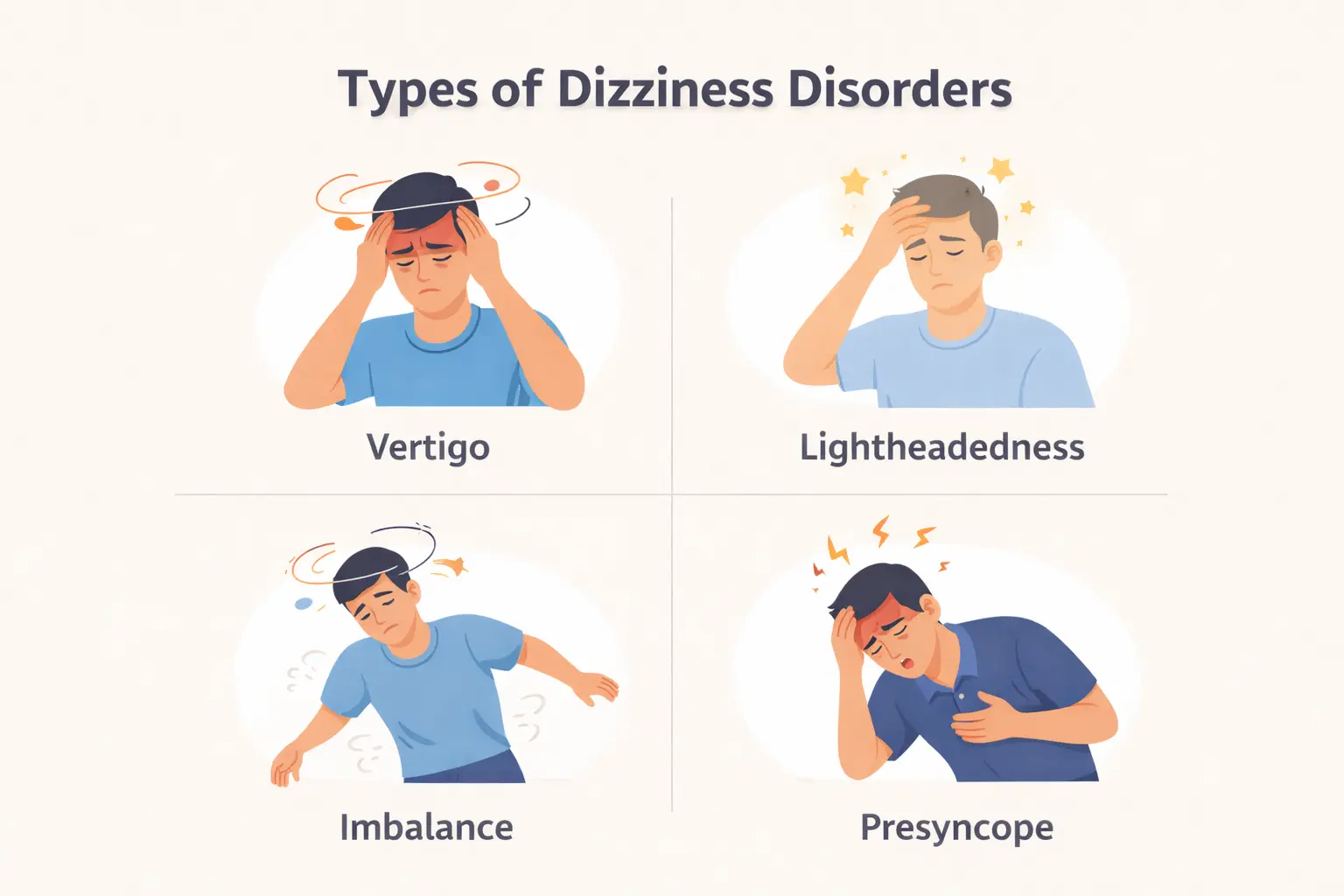
Types of Dizziness Disorders
Vertigo
The most common is vertigo. Even when at rest it produces a spinning effect. It is often linked with inner ear problems.
Disequilibrium
This has the effect of creating an imbalance. Walking becomes unstable. It is common in older adults.
Presyncope
Such is as though you were going to pass out. It is usually related to the issue of blood pressure or heart.
Lightheadedness
A vague feeling of being faint, weak, or disconnected. It is often linked to dehydration, stress, or fatigue.
Dizziness anxiety disorder and dizziness
Some people feel dizzy due to anxiety or panic attacks. This type is not caused by a physical imbalance but by changes in breathing and stress levels.
Symptoms of Dizziness Disorders
The symptoms will vary depending on the cause. They may be mild or severe. Common symptoms include:
- Spinning sensation vertigo,
- Loss of balance
- Feeling faint or weak
- Blurred vision
- Nausea or vomiting
- Difficulty walking
- Headache
- Sensitivity to motion
People who have anxiety disorder and dizziness may also have: Rapid heartbeat, Sweating, Shortness of breath. Symptoms can come and go. Some of them take hours and some of them take seconds.

Causes and Risk Factors of Dizziness Disorders
There are so many conditions that can cause dizziness. The cause needs to be discovered.
Common Causes: Inner ear disorders, Low blood pressure, Dehydration, Migraine, Medications, Anxiety disorders
Neurological Causes: Stroke, Multiple sclerosis, Parkinson’s disease, Brain tumors. The conditions affect the brain in control balancing.
Risk Factors: Aging, Poor diet, Stress and anxiety, Chronic illnesses, Lack of sleep. Persons with balanced dizziness disorders may also have several risk factors.
Tests and Diagnosis of Dizziness Disorders
Doctors have several steps in which they diagnose dizziness.
Medical History: The doctor asks questions about the symptoms, the time and the injuries.
Physical Examination: Balance and coordination tests are performed.
Common Tests: Blood tests, Hearing tests, MRI or CT scan, Balance testing. These tests help in the diagnosis of what neurological disorder causes dizziness or other causes.
Balance dizziness disorders: ICD-10 code.
A general ICD 10 description of dizziness is:
R42 Dizziness and giddiness
This code is used in diagnosis and medical records.

Treatment Dizziness Disorders
Treatment is based on the cause.
Medical Treatment: Medications for vertigo, Anti-anxiety drugs, Blood pressure control.
Therapies: Vestibular rehabilitation, Balance training exercises.
Lifestyle Changes: Stay hydrated, Avoid sudden movements,
Manage stress: Relaxation techniques and therapy are useful in the event of anxiety disorder and dizziness.
Living With Dizziness Disorders
Feeling dizzy can be a hard process to experience. However, the quality of life is improved through proper management.
Daily Tips: Move slowly when standing, Use support when walking, Do not expose to stimuli including bright lights, Maintain a healthy diet. Patterns can be drawn by monitoring the symptoms. It may be used in the long-term management of (balance dizziness disorders).
Complications of dizziness
Untreated dizziness can lead to serious complications.
Possible Complications: Falls and injuries, Reduced mobility, Anxiety and depression, Failure to perform the daily tasks.

FAQS
Could it be due to some anxiety that you feel dizzy?
Fear can make one feel lightheaded, yes. It affects the circulation and respiration of the blood.
What medical condition causes you to feel dizzy?
Dizziness can be a symptom of stroke, multiple sclerosis and Parkinson disease.
Serious balance dizziness disorders? dizziness disorders?
Some parts are benign and others may indicate severe conditions. It is important to check up in hospitals.
What will prevent me from feeling dizzy?
Sit or lie down immediately. Take water, do not jump about.
When to visit the doctor?
Seek help when feeling dizzy is frequent, severe or accompanied with another symptom.