
High Cholesterol
Overview
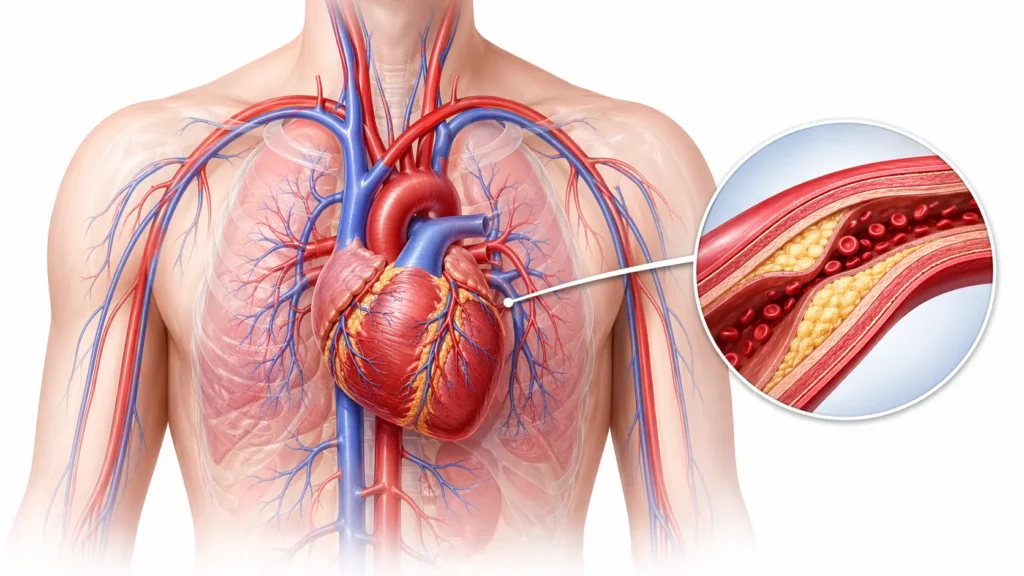
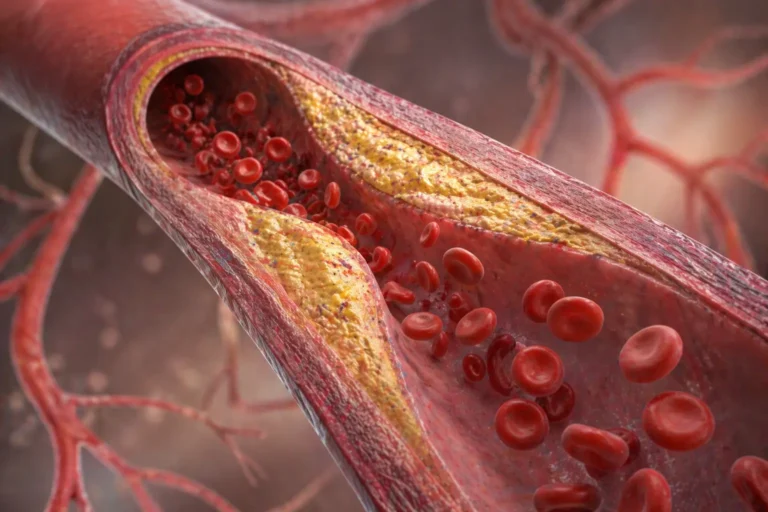
High cholesterol is a widespread disease in which too much fat accumulates in the blood. These fats are referred to as ‘lipids’, and they comprise LDL bad cholesterol and HDL good cholesterol. The increase in LDL levels may cause them to attach to the walls of arteries and create plaques. In the long run, it constricts blood vessels and has impacts on circulation. A lot of individuals have high cholesterol, but they are not aware. It usually has no initial symptoms, and that is why it is referred to as a ‘silent condition’. When uncontrolled, it heightens the chances of heart disease and stroke. Awareness and lifestyle changes in the early stages can result in a significant difference.
What is High Cholesterol?
High cholesterol occurs when the amount of cholesterol in the blood is in excess. Cholesterol is not in itself bad. It is required by the body to develop cells and hormones. The problem begins as the levels get imbalanced. LDL cholesterol is involved in the formation of plaques. The HDL cholesterol aids in eliminating cholesterol in the blood. It is important to have a healthy balance between the two. In cases of LDL being high and HDL being low, risks are likely to be high. Cholesterol is most commonly measured by a blood test known as a lipid profile. This aids in establishing normal or high levels.
Types of High Cholesterol
Primary High Cholesterol
This is a genetic type. It is familial and is also known as ‘familial hypercholesterolaemia’. Individuals affected by this condition get high cholesterol at a tender age.
Secondary High Cholesterol
This form arises as a result of lifestyle or illnesses. The reasons are poor diet, absence of exercises and obesity.
Mixed Dyslipidemia
This is high LDL, low HDL, and high triglycerides. It is a greater cardiovascular risk factor than an individual abnormality.
Familial Combined Hyperlipidemia
It is a genetic disorder which leads to high cholesterol and high triglyceride levels. It manifests itself frequently in adolescents or young adults.
Isolated Hypertriglyceridemia
In this type, the levels of triglycerides are elevated, with cholesterol being either normal or slightly increased.
Symptoms of High Cholesterol
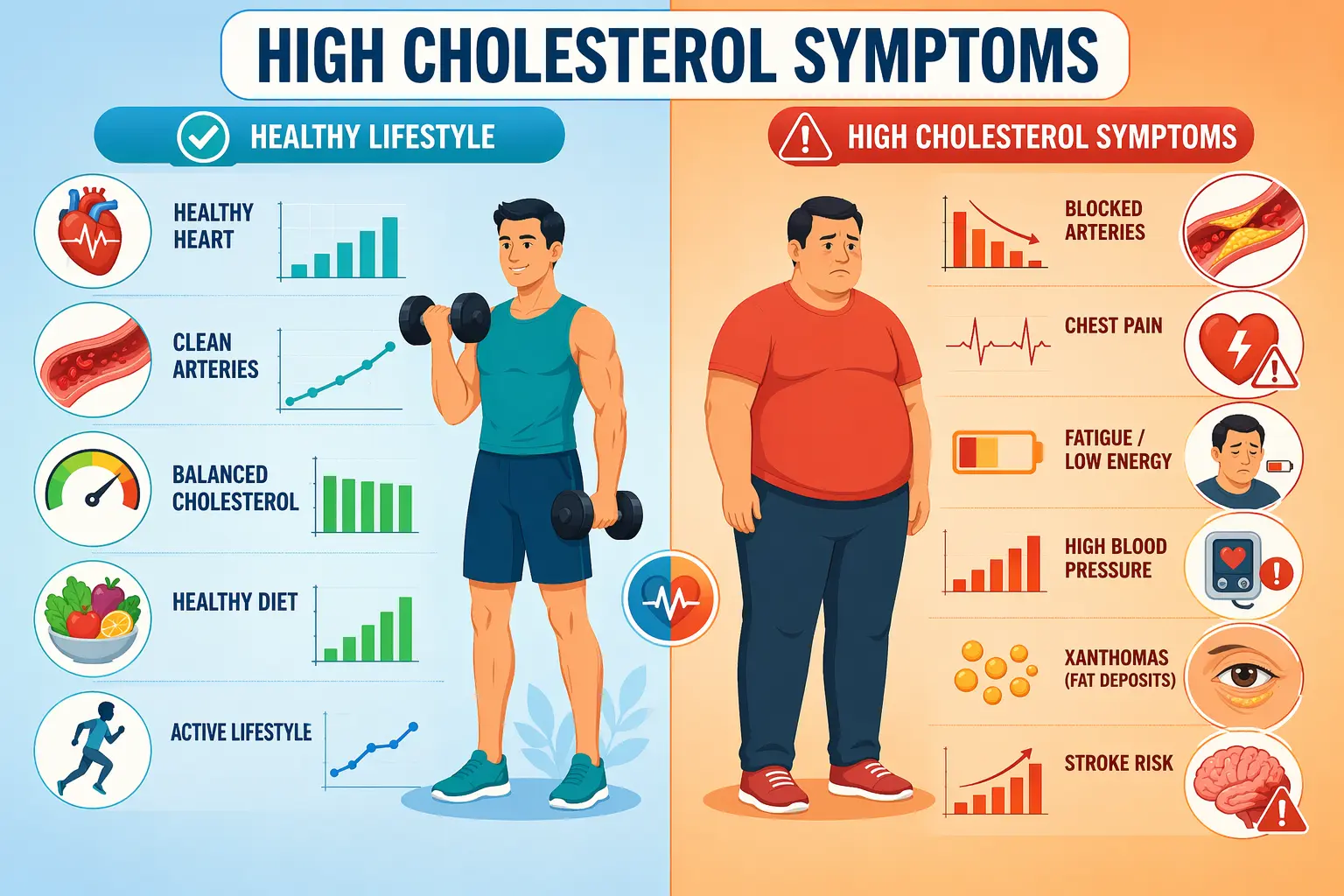
Elevated cholesterol is typically asymptomatic. It is often not found out until a person is tested. Nevertheless, there are instances where there are trace materials.
The typical symptoms of high cholesterol are:
- Fat under the skin xanthomas
- High cholesterol eyes: yellowish patches around the eyes.
- In more severe cases, chest pain is experienced.
- In extreme cases, fatigue or weakness.
There are those who pose the question, ‘Does high cholesterol make you tired?’ It may indirectly lead to fatigue when one has a low blood flow. But fatigue is not a chief symptom. Symptoms are not always evident, so it is important to test regularly.
Causes and Risk Factors of High Cholesterol
There are many causes of high cholesterol. There are those that can be managed and those that cannot.
Common Causes: Saturated and trans fats in the diet, physical inactivity, alcohol and smoking, obesity, medical conditions (diabetes, hypothyroidism, liver or kidney disease), and genetic factors. Family history is a powerful factor. In case your parents have high cholesterol, it puts you at risk.
Risk Factors: Age older people are at more risk; Gender men are at a higher risk earlier; poor lifestyle habits. A significant part is food. A lot of individuals find the ten worst foods to avoid high cholesterol or the 15 foods to avoid high cholesterol. They typically feature fried foods, processed meat, fullfat dairy and high transfat baked goods.
Tests and Diagnosis of High Cholesterol
A number of tests are used by doctors in diagnosing high cholesterol.
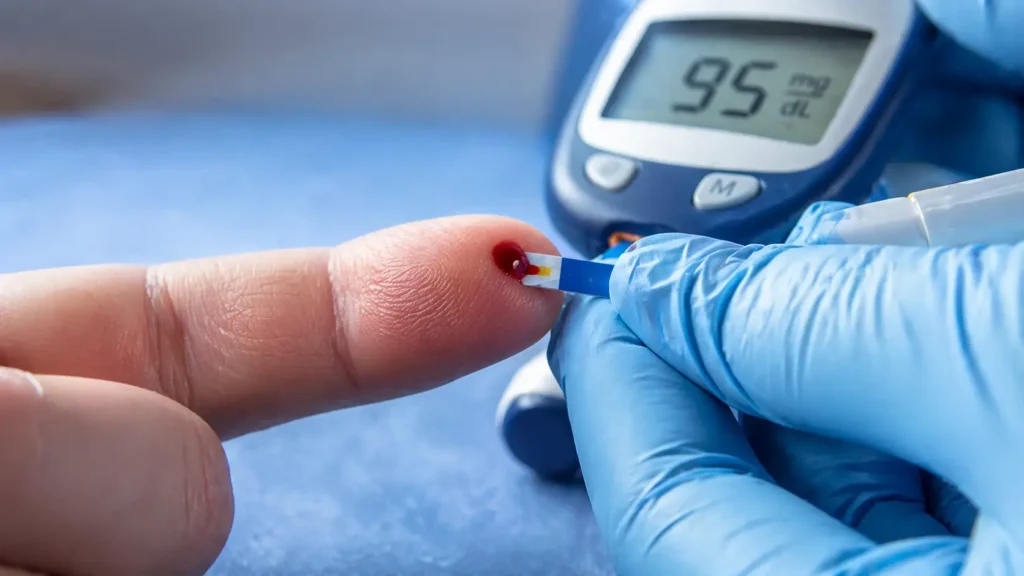
Lipid Profile Test: It is the most typical test. It measures total cholesterol, LDL cholesterol, HDL cholesterol, triglycerides.
Physical Examination: Physicians can examine such apparent symptoms as fatty deposits or cholesterol eyes.
Risk Assessment: The risk of heart disease in general is calculated by your doctor on the basis of your age, lifestyle and medical history.
When to Test: Cholesterol levels should be checked by adults after every 46 years. Individuals at risk might require a higher rate of testing.
ICD 10 Code High Cholesterol.
Medical records and billing are coded as ICD10 high cholesterol. E78.0 Pure hypercholesterolaemia and E78.2 Mixed hyperlipidaemia. A lot of individuals use such words as ‘high cholesterol ICD10’ or ‘ICD10 code high cholesterol’. These codes assist the health practitioners to categorise the condition appropriately.
Treatment of High Cholesterol
Treatment aims at reducing LDL and enhancing the health of the heart in general.
Lifestyle Changes: Consume a healthy diet with low amounts of saturated fats, increase fibre intake, exercise regularly, and eat healthy.
Medications: In case lifestyle changes are not sufficient, doctors can prescribe medications.
Common options include: Statins, Bile acid sequestrants, Cholesterol absorption inhibitors
Supplements: Others seek the most appropriate supplements for high cholesterol. This can be omega3 fatty acids, plant sterols and soluble fibre. Nonetheless, supplements are not to be used instead of medical treatment.
Complications of High Cholesterol
Unattended high cholesterol may cause severe health issues.
Common Complications:
- Heart disease
- Stroke
- Peripheral artery disease
The accumulation of plaque constricts arteries and slows down the blood circulation. This puts one at risk of heart attacks and other cardiovascular events. These complications can be avoided by early diagnosis and treatment.

FAQS
What are the symptoms of high cholesterol?
There are no usual symptoms of high cholesterol. Others might develop fat deposits on the skin surface or under the eyes. It is best detected by regular testing.
Are you tired of having high cholesterol?
Excess cholesterol does not necessarily cause fatigue. Nevertheless, in severe situations, fatigue can be caused by the decreased blood flow.
Which foods should I avoid eating that have high cholesterol?
Steer clear of fried foods, processed meat, sweet snacks, and trans fats. There are numerous lists of the top ten worst foods with high cholesterol to make your choices better.
Which is the ICD10 code of high cholesterol?
The E78.0 ICD10 code is the most frequent code in case of high cholesterol. E78.2 can be used in mixed cases.
Do supplements help with high cholesterol?
Certain supplements can be used to reduce the level of cholesterol. Nonetheless, they are to be employed with medical guidance and lifestyle modifications.