
Fibromyalgia
Overview
Fibromyalgia is a chronic disorder that leads to pain experienced anywhere in the body. It also impacts sleep, mood, and energy. Fibromyalgic patients are usually fatigued despite a good rest. The disorder is factual and has the potential to impact everyday life in numerous aspects. The initial knowledge assists in coping with symptoms. It is not fatal but may impair the quality of life. There are a lot of individuals who suffer a long period before diagnosis. The symptoms may be mild or severe. Even with the appropriate treatment, individuals can achieve a balanced life.

What is fibromyalgia?
Fibromyalgia is a persistent pain syndrome that is also associated with the manner in which the brain interprets pain. It makes one more sensitive to pain. Even a low pressure can be felt. It usually comes along with sleep problems, fatigue and memory problems. There is no complete understanding of the cause by the doctors. Nonetheless, it is associated with the nervous system. It is prevalent among women and not men. It can occur following stress, illness or trauma.
Types of Fibromyalgia
Primary Fibromyalgia
This kind grows naturally. It has no other underlying disease. It is the most prevalent type. The symptoms primarily consist of pain and fatigue.
Secondary Fibromyalgia
This type occurs with other conditions. These can be arthritis or autoimmune diseases. Treatment of the primary condition can be used to alleviate symptoms.
Localized Fibromyalgia
This type affects specific areas of the body instead of widespread pain. Pain may stay in one region like the neck or back. It can later spread to other parts over time. Early management may help prevent progression.
Fibromyalgia with Comorbid Conditions
This type occurs along with other illnesses. These may include arthritis, lupus, or chronic fatigue syndrome. Symptoms can be more complex and severe. Treatment focuses on managing both conditions together.
Stress-Triggered Fibromyalgia
This type develops after emotional or physical stress. Events like trauma, surgery, or infections may trigger it. Symptoms often begin suddenly. Managing stress plays a key role in treatment.
Fibromyalgia Symptoms
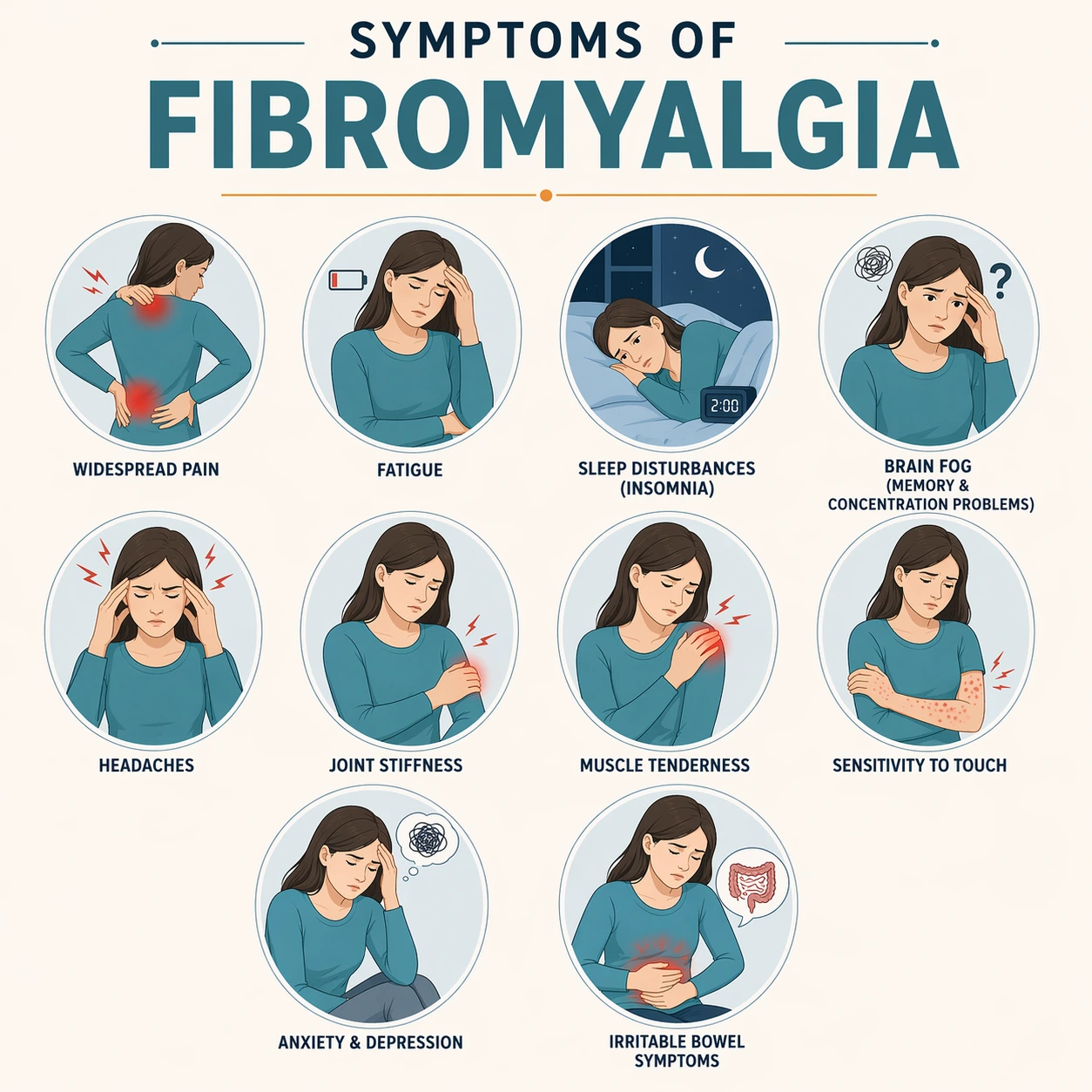
The symptoms of fibromyalgia may vary. There are some bad days and there are good days. They are referred to as fibromyalgia flare-ups.
Common symptoms include:
- Widespread muscle pain
- Fatigue and lack of energy.
- Sleep problems
- Difficulty focusing the brain (brain fog).
- Headaches
- Depression or anxiety
- Pain in hands or feet.
Pain has been defined as constant and dull. It takes a minimum of three months. Symptoms can be aggravated by stress and lack of sleep.

Fibromyalgia causes and risk factors
Fibromyalgia is not known to have a definite cause. Nonetheless, a number of factors could be involved.
Possible Causes: Genetics, infections, trauma (physical or emotional), and nervous system changes.
Risk Factors: Gender (more prevalent in women), family history, chronic stress, lack of sleep, and other chronic diseases. Fibromyalgia can come on slowly. It may also begin following a stressful incidence.
Fibromyalgia tests and diagnosis
There is no single test for fibromyalgia. It is diagnosed by doctors through symptoms. They are excluded by other conditions.
Diagnosis Methods: Physical examination, pain assessment, blood tests to exclude other diseases, and medical history review. Physicians usually consider pain points and duration of the symptoms. The main symptom is pain that lasts over three months.
ICD 10 Code of Fibromyalgia.
The official ICD 10 code of fibromyalgia is M79.7. It is adopted in the medical records and insurance. This code is used when diagnosing fibromyalgia by doctors.

Fibromyalgia treatment
There is no cure for fibromyalgia. The therapy is aimed at symptom management. An integration of approaches is optimal.
Medications: Painkillers (taking the best painkiller to relieve fibromyalgia depends on the patient), antidepressants, Anti-seizure medications such as pregabalin and naltrexone treat fibromyalgia. Low dose, Tonmya to treat fibromyalgia (to treat sleep and muscle pains)
Therapies: Physical therapy, Counseling, Stress management
Lifestyle Changes: Regular exercise, a healthy sleep routine, a balanced fibromyalgia diet
Living With Fibromyalgia
Fibromyalgia needs to be attended to daily. Minor adjustments can be made to enhance the quality of life. It is important to deal with stress.
Helpful tips: Do Yoga with Fibromyalgia. Follow a healthy diet. Stay physically active. Take supplements as prescribed to treat fibromyalgia. Have a sleep schedule. Family and doctor support come in handy. Numerous individuals study how to cope with their symptoms over time.
Complications of Fibromyalgia
Unless well managed, fibromyalgia can cause other issues.
Common Complications:
- Depression
- Anxiety
- Poor sleep quality
- Reduced work performance
- Social isolation
Daily activities may be influenced by pain and fatigue. Problems are avoided by early treatment.

FAQS
What is fibromyalgia?
Fibromyalgia is a chronic disorder that leads to pain throughout the body. It also causes sleepiness and fatigue. Lots of individuals undergo mood shifts and brain fog. The disorder impacts the manner in which the brain processes pain. Symptoms can be controlled with proper care.
Is Lady Gaga fibromyalgic?
Lady Gaga does confess to having fibromyalgia. She has talked of her issues with chronic pain and fatigue. Through her story, awareness was created about the condition. It also depicted the impact of the invisibility of illnesses on everyday life. Her disclosure was understood by many people.
What is a fibromyalgia flare-up?
A fibromyalgia flare-up is a sudden increase in symptoms. Pain, fatigue, and discomfort worsen. It may be brought about by stress or lack of sleep or sickness. Flare-ups may last for days or even weeks. Trigger management can be used to minimise the frequency of triggers.
So what is the most effective painkiller to treat fibromyalgia?
There is no single most effective painkiller for fibromyalgia. The treatment is based on the symptoms of each individual. Various drugs can be prescribed by doctors to relieve pain. These may contain pain relievers such as nerve pain medicines or antidepressants. An individual approach is most effective.
Are there any fibromyalgia specialists?
Yes, there are fibromyalgia experts. This condition is normally treated by rheumatologists and doctors specialising in pain management. They have an appreciation of chronic pain and its symptoms. Care may also involve some neurologists. A team approach is more likely to work out.