
Introduction
If you’ve ever been jolted awake by a sharp cramp in your calf or a deep, restless ache running through your legs after the lights go out, you already know how frustrating it can be. Many people search for answers when their legs hurt at night, hoping to understand why the pain seems to show up only after they lie down to sleep. The truth is, nighttime leg pain can stem from something as simple as overuse during the day or as complex as an underlying circulatory or nerve condition. Understanding the possible causes is the first step toward better sleep and lasting relief.
Not sure these symptoms match yours?
Try our FREE symptoms checker to compare what your pain might
What Does It Mean When Your Legs Hurt at Night?
Leg pain that strikes specifically at night, rather than during activity, often points to how your body behaves at rest. When you lie down, blood flow patterns shift, muscles relax unevenly, and nerve signals that were masked by daytime movement can suddenly become noticeable. This is why so many people whose legs hurt at night describe the sensation as cramping, throbbing, tingling, or a deep, restless urge to move their legs. While occasional discomfort is usually harmless, pain that happens regularly deserves a closer look at what might be triggering it.
Who Is More Likely to Experience Leg Pain at Night?
While almost anyone can have an occasional restless night because of leg discomfort, some groups tend to deal with it more often. Older adults are more prone to nighttime cramps and circulation issues simply because muscles and blood vessels naturally lose some efficiency with age. Pregnant women frequently report leg cramps and restless sensations, largely due to extra weight, fluid retention, and shifting nutrient needs. Athletes and people who are very active during the day may notice cramping at night from muscle fatigue, while those with a mostly sedentary lifestyle can experience the opposite problem: stiffness and poor circulation from too little movement. People managing chronic conditions such as diabetes, kidney disease, or thyroid disorders are also more likely to notice that their legs hurt at night, since these conditions can directly affect nerves, minerals, and blood flow.
Common Causes of Legs Hurting at Night
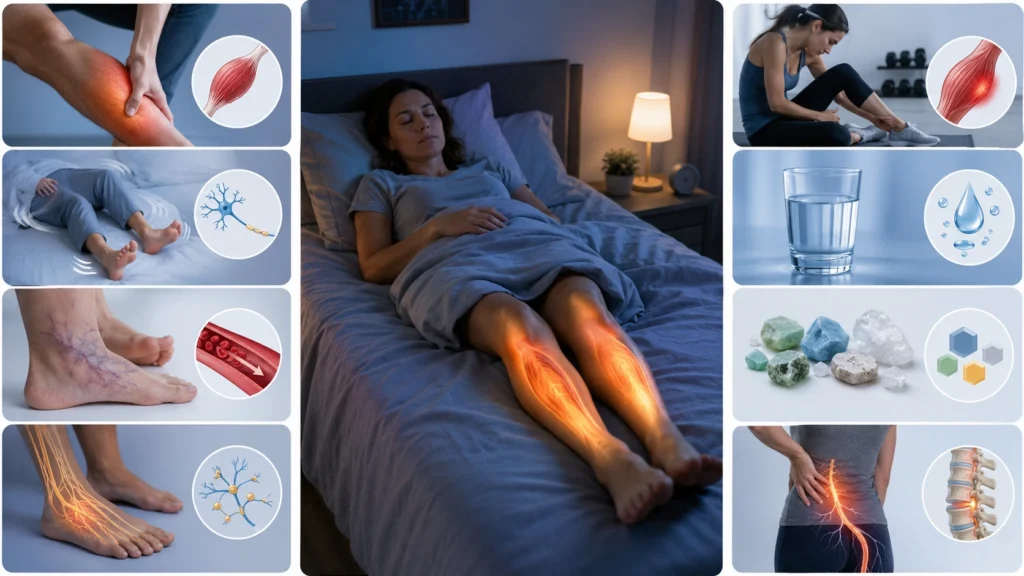
Night time leg pain rarely has just one explanation. The list below covers some of the most common physical and medical reasons people experience this kind of discomfort.
1. Nocturnal Leg Cramps
One of the most common reasons legs hurt at night is sudden, involuntary muscle cramping, usually in the calf. These cramps can last anywhere from a few seconds to several minutes and often happen after a long day of standing, exercising, or sitting in one position for too long. Tight muscles, overexertion, and fluid imbalances are frequent triggers. Some people notice the cramps become more frequent during particularly active weeks, while others find they appear seemingly at random, which can make the pattern harder to pin down without tracking it over time.
2. Restless Legs Syndrome (RLS)
Restless Legs Syndrome causes an uncontrollable urge to move the legs, often paired with an uncomfortable crawling or tingling sensation that worsens in the evening. RLS has been linked to low iron levels, so anyone dealing with this condition should consider getting checked for iron deficiency anemia, since correcting iron levels can sometimes ease the symptoms significantly.
3. Poor Blood Circulation
When circulation slows down at night, especially in people who sit or stand for long stretches during the day, blood can pool in the legs and cause aching or heaviness. Conditions that affect blood pressure, including low blood pressure, can sometimes contribute to this kind of circulatory discomfort.
4. Nerve Related Pain (Peripheral Neuropathy)
Damaged or irritated nerves in the legs can cause burning, tingling, or stabbing pain that becomes more noticeable at night when there are fewer distractions. This is particularly common in people living with type 2 diabetes, where prolonged high blood sugar levels can damage nerve fibres over time.
Still unsure what's causing your symptoms?
5. Dehydration and Mineral Imbalance
Not drinking enough water during the day, or losing too many electrolytes through sweat, can leave muscles more prone to cramping and spasms once you finally lie down. Dehydration is one of the easiest causes to rule out, since the fix is often as simple as adjusting your daily fluid intake.
6. Kidney Function Issues
The kidneys play an important role in balancing minerals like calcium, potassium, and phosphorus, all of which affect muscle and nerve function. When kidney function declines, as seen in chronic kidney disease, muscle cramps and leg discomfort at night can become more frequent.
7. Joint and Muscle Conditions
Ongoing joint pain from wear and tear, inflammation, or old injuries can flare up at night because the body has fewer distractions from internal signals. Similarly, fibromyalgia is well known for causing widespread muscle tenderness that intensifies during rest and disrupts sleep.
8. Spine and Nerve Compression
Pain that originates in the lower back and travels down the leg, often described as sciatica, may worsen when lying flat because of how the spine is positioned. If you frequently deal with lower back pain alongside leg discomfort, the two issues may well be connected.
9. Sleep Position and Daily Overuse
Sometimes the cause is mechanical rather than medical. Sleeping with your legs in an awkward position, overworking your muscles during exercise, or simply being on your feet all day can leave your legs sore once you finally settle down to rest. Even something as simple as a mattress that’s too firm or too soft, or blankets that are tucked too tightly around your feet, can subtly restrict movement and circulation throughout the night without you ever realising it.
When Should You See a Doctor for Leg Pain at Night?
Occasional, mild leg discomfort is rarely a cause for alarm, but certain signs suggest it’s time to consult a healthcare provider. You should seek medical attention if your leg pain is accompanied by swelling, redness, or warmth in one leg, since this could indicate a blood clot. Pain that is severe, doesn’t improve with rest or stretching, or is paired with constant fatigue and weakness may point to an underlying condition that needs proper diagnosis. Numbness, a noticeable change in skin colour, or pain that consistently wakes you from sleep night after night are also worth discussing with your doctor, especially if you have risk factors like diabetes or kidney issues.
How to Relieve Leg Pain at Night
A few simple, consistent habits can go a long way toward easing nighttime leg discomfort:
- Stay hydrated throughout the day, not just in the evening, to reduce the risk of cramping.
- Stretch your calves and hamstrings gently before bed to loosen tight muscles.
- Try a warm bath or heating pad to relax muscles before sleep.
- Elevate your legs slightly with a pillow to support healthy circulation.
- Wear supportive, well fitted shoes during the day to reduce strain.
- Include magnesium rich foods in your diet, such as leafy greens, nuts, and whole grains.
- Avoid excessive caffeine or alcohol close to bedtime, as both can worsen cramping and disrupt sleep.
If poor sleep continues despite these changes, it may also be worth looking into insomnia, since sleep quality and leg discomfort often influence one another.
Still unsure what's causing your symptoms?
Preventing Nighttime Leg Pain Long Term
Prevention usually comes down to consistency. Staying active during the day without overdoing it, maintaining a balanced diet rich in electrolytes, managing chronic conditions like diabetes or kidney disease, and paying attention to your sleep posture can all reduce how often your legs hurt at night. If lifestyle changes aren’t enough on their own, a doctor can run simple tests to check for nerve, vascular, or mineral related issues.
Frequently Asked Questions
Why do my legs hurt only at night and not during the day?
At night, your body is at rest and there are fewer distractions, so sensations like cramps, restless legs, or nerve pain become more noticeable. Reduced movement and shifting circulation also play a role.
Is it normal to get leg cramps every night?
Occasional cramps are common, but if they happen every night, it’s worth checking for dehydration, mineral deficiencies, or an underlying condition like restless legs syndrome.
Can dehydration really cause my legs to hurt at night?
Yes. Not drinking enough fluids during the day can lead to electrolyte imbalances, which make muscles more prone to involuntary cramping once you lie down.
What deficiency causes legs to hurt at night?
Low levels of magnesium, potassium, calcium, or iron are commonly linked to nighttime leg pain and cramping.
Can stress or anxiety cause leg pain at night?
Yes, stress can increase muscle tension throughout the body, including the legs, which may contribute to nighttime aching or restlessness.
Does diabetes cause leg pain at night?
It can. Long term high blood sugar may damage nerves over time, leading to burning or tingling pain that often feels worse at night.
How can I stop my legs from hurting at night quickly?
Gentle stretching, a warm bath, staying hydrated, and elevating your legs can offer quick, short term relief.
When is leg pain at night a medical emergency?
If one leg suddenly becomes swollen, red, warm, or painful, seek medical care immediately, as this could indicate a blood clot.
Can poor sleeping position cause leg pain?
Yes, sleeping with your legs twisted or under pressure can restrict circulation and lead to discomfort or cramping overnight.
Should I see a doctor if my legs hurt every night?
If the pain is frequent, severe, or interfering with your sleep and daily life, it’s a good idea to consult a healthcare provider for a proper evaluation.